
Garden Tour Italy – Roman Villas and Renaissance Garden. Italian Renaissance garden. The Italian Renaissance garden became a new style of garden which emerged inside the overdue fifteenth century at villas in Rome and Florence, stimulated via classical ideals of order and splendor, and meant for the pleasure of the view of the garden and the panorama past, for contemplation, and for the amusement of the sights, sounds, and scents of the garden itself.
Within the past due Renaissance, the gardens have become large, grander, and greater symmetrical, and have been packed with fountains, statues, grottoes, water organs, and other features designed to satisfaction their proprietors and amuse and impress visitors. The style turned into imitations throughout Europe, influencing the gardens of the French Renaissance and the English garden.

 Garden Tour To England Italy And France Garden Travel Hub
History
Previous to the Italian Renaissance, Italian Medieval gardens have been enclosed through walls and had been devoted to growing veggies, end result, and medicinal herbs, or, within the case of monastic gardens, for silent meditation and prayer. The Italian Renaissance garden broke down the wall among the lawn, the residence, and the panorama out of doors.
Beginning in the early modern-day period translations of Classical works began to flow into amongst EU society, and by using the mid-sixteenth century showed impacts of Francesco di Giorgio Martini and Sebastiano Serlio, being seemed greater like works of art themselves.
The Italian Renaissance lawn, like Renaissance artwork and architecture, emerged from the rediscovery by means of Renaissance pupils of classical Roman fashions. They had been stimulated by way of the descriptions of historic Roman gardens given by Ovid in his Metamorphoses, with the aid of the letters of Pliny the younger, by using Pliny the Elder’s Naturalis Historia, and in Rerum Rusticanum with the aid of Varro, all of which gave a certain and lyrical description of the gardens of Roman villas.
Pliny the more youthful described his existence at his villa at Laurentum: “awesome lifestyles and a true one, which is glad and honorable, more profitable than any ‘business’ can be. You should take the primary opportunity to go away the din, the futile bustle, and main occupations of the town and dedicate yourself to literature or to amusement.”The purpose of a lawn, in line with Pliny, changed into otium, which might be translated as seclusion, serenity, or relaxation, which turned into the opposite of the idea of negotium that often classified busy urban existence. A lawn became a place to suppose, relax, and escape.
Pliny described shaded paths bordered with hedges, ornamental parterres, fountains, and timber and trees trimmed to geometric or remarkable shapes, all capabilities which would become a part of the future Renaissance lawn.
Leon Battista Alberti
The primary Renaissance textual content to encompass lawn design become De re aedificatoria (the ten Books of structure), with the aid of Leon Battista Alberti (1404–1472). He drew upon the architectural concepts of Vitruvius and used quotations from Pliny the Elder and Pliny the more youthful to explain what a garden must appear like and how it ought to be used. He argued that a villa should each be checked out and a place to look from; that the house needs to be located above the garden, in which it is able to be visible and the owner should look down into the lawn.
Alberti wrote: “The development will give pride to the tourist if, once they go away the metropolis, they see the villa in all its allure, as if to seduce and welcome the brand new arrivals. towards this quit, I’d place it on a barely elevated vicinity. i might additionally have the road climb so gently that it fools folks who take it to the point that they do now not realize how excessive they have climbed until they find out the geographical region underneath.”
In the lawn, Alberti wrote: “…You should place porticos forgiving shade, planters where vines can climb, positioned on marble columns; vases, and fun statues, furnished they are not obscene. You have to additionally have uncommon vegetation timber needs to be aligned and arranged flippantly, every tree aligned with its neighbors.”
The literature has an effect on the Italian Renaissance garden

The Apennine Colossus through Giambologna within the gardens of Villa di Pratolino, approximately 1580
A famous romance, The Hypnerotomachia Poliphili, (Poliphilo’s Strife of love in a Dream), posted in 1499 in Venice with the aid of the monk Francesco Colonna, additionally had a crucial influence on the gardens of the Renaissance. It defined the voyage and adventures of a traveler, Poliphile, through incredible landscapes, looking for his love, Polia. The scenes defined within the book and the accompanying woodcut illustrations encouraged many Renaissance gardens; they blanketed a lake-island (as on the Boboli Gardens), giants rising from the earth (as at Villa di Pratolino), the maze and the fountain of Venus (as at Villa di Castello), where Poliphile and Polia have been reconciled.
Power and elegance – The political symbolism of the Renaissance garden
At the same time as the early Italian Renaissance gardens had been designed for contemplation and pride with tunnels of greenery, trees for shade, an enclosed Giardino Segreto (secret garden) and fields for games and amusements, the Medici, the ruling dynasty of Florence, used gardens to illustrate their own energy and elegance. “at some stage in the primary half of the sixteenth century, the class got here to be perceived as a princely virtue, and everywhere in the Italian peninsula architects, sculptors, painters, poets, historians, and humanist students have been commissioned to concoct a superb picture for their powerful shoppers.
” The critical fountain at Villa di Castello featured a statue of Hercules defeating Antaeus, alluding to the triumph of the garden’s builder, Cosimo de’ Medici. over a faction of Florentine nobles who had tried to overthrow him. The garden was a shape of political theater, providing the energy, awareness, order, splendor, and glory that the Medici had introduced to Florence.
Glossary of the Italian Renaissance lawn
Bosco Sacro. Sacred wooden. A grove of timber inspired by using the groves wherein pagans could worship. In Renaissance and mainly mannerist gardens, this section was filled with allegorical statues of animals, giants, and mythical creatures.
Fontaniere. The fountain-maker, a hydraulic engineer who designed the water device and fountains.
Giardino Segreto. Whe secret garden. An enclosed private lawn within the lawn, inspired via the cloisters of Medieval monasteries. an area for reading, writing, or quiet conversations.
Giochi d’acqua. Water hints. concealed fountains that sopping wet unsuspecting site visitors.
Semplici. “Simples,” or medicinal flowers and herbs.
Gardens of the Early Italian Renaissance
The Medici Villa at Fiesole (1455-1790)
Villa Medici in Fiesole.

The oldest current Italian Renaissance lawn is on the Villa Medici in Fiesole, north of Florence. It turned into created sometime between 1455 and 1461 by using Giovanni de’ Medici (1421–1463) the son of Cosimo de’ Medici, the founding father of the Medici dynasty. in contrast to other Medici family villas that have been located on flat farmland, this villa became located on a rocky hillside with a view over Florence.
The Villa Medici observed Alberti’s precepts that a villa ought to have a view ‘that overlooks the town, the proprietor’s land, the sea or an incredible undeniable, and acquainted hills and mountains,’ and that the foreground has ‘the delicacy of gardens.'[11] The lawn has massive terraces, one on the ground floor stage and the alternative at the level of the first floor. From the reception rooms on the primary floor, visitors may want to exit to the loggia and from there to the lawn so the loggia changed into a transition space connecting the indoors with the exterior. in contrast to later gardens, the Villa Medici did now not have a grand staircase or different feature to hyperlink the 2 ranges.
The garden become inherited by way of his nephew, Lorenzo de’ Medici, who made it a meeting place for poets, artists, writers, and philosophers. In 1479, the poet Angelo Poliziano, instruct the Medici children, defined the lawn in a letter: “Seated among the sloping sides of the mountains we’ve here water in abundance and is constantly refreshed with moderate winds find little inconvenience from the glare of the sun. As you technique the house it appears embosomed inside the timber, but while you reach it you discover it commands a complete prospect of the metropolis.”[
The Palazzo Piccolomini at Pienza, Tuscany (1459)
Gardens of the Palazzo Piccolomini
The Palazzo Piccolomini at Pienza turned into built by means of Enea Silvio Piccolomini, who became Pope from 1458 to 1464, underneath the name of Pius II. He changed into a student of Latin and wrote substantially on education, astronomy, and social lifestyle. In 1459, he constructed a palace for himself and his Cardinals and court docket in his small native metropolis of Pienza.
Like the Villa Medici, a major feature of the house become the commanding view to be had from the loggia over the valley, the Val d’Orcia, to the slopes of Monte Amiata. in the direction of the residence, there had been terraces with geometric flowerbeds surrounding fountains and ornamented with trees trimmed into cones and spheres much like the garden of Pliny defined in Alberti’s De re aedificatoria. The lawn was designed to open to the metropolis, the palace, and the view.
The Cortile del Belvedere inside the Vatican Palace, Rome (1504–1513)
Main article: Cortile del Belvedere
Bramante’s design for the Belvedere Courtyard

In 1504 Pope Julius II commissioned the architect Donato Bramante to recreate a classical Roman pride garden within the area between the antique papal Vatican palace in Rome and the nearby Villa Belvedere. His model changed into the historical Sanctuary of Fortuna Primigenia at Palestrina or historic Praeneste, and he used the classical beliefs of percentage, symmetry, and attitude in his design.
He created a valuable axis to hyperlink the two buildings, and a sequence of terraces related by using double ramps, modeled after those at Palestrina. The terraces were divided into squares and rectangles with the aid of paths and flowerbeds and served as an outdoor placing for Pope Julius’s outstanding collection of classical sculptures, which included the well-known Laocoön and the Apollo Belvedere. The heart of the garden changed into a courtyard surrounded by means of a three-tiered loggia, which served as a theater for entertainment. A valuable exedra fashioned the dramatic conclusion of the lengthy attitude up the courtyard, ramps, and terraces.
The Venetian Ambassador defined the Cortile del Belvedere in 1523: “One enters a very beautiful garden, of which half is packed with developing grass and bays and mulberries and cypresses, whilst the alternative 1/2 is paved with squares of bricks laid upright, and in every square, a stunning orange tree grows out of the pavement, of which there are an exquisite many, organized in ideal order On one aspect of the garden is a most lovely loggia, at one stop of which is an adorable fountain that irrigates the orange bushes and the rest of the lawn by using a little canal inside the middle of the loggia.”
Unluckily, the development of the Vatican Library within the past due sixteenth century across the center of the cortile manner that Bramante’s layout is now obscured however his ideas of percentage, symmetry, and dramatic views have been used in some of the tremendous gardens of the Italian Renaissance.
The Villa Madama, Rome (1516)
Villa Madama (1516)
The Villa Madama, located at the slopes of Monte Mario and overlooking Rome, changed into started with the aid of Pope Leo X and persisted by way of Cardinal Giulio de’ Medici (1478–1534). In 1516 Leo X gave the fee to Raphael who was at that time the most well-known artist in Rome. using the historical textual content of De Architectura with the aid of Vitruvius and the writings of Pliny the more youthful, Raphael imagined his very own model of a great classical villa and garden. His villa had an excellent circular courtyard and became divided into a winter condo and a summertime apartment.
Passages led from the courtyard to the extremely good loggia from which perspectives could be gained of the garden and Rome. A round tower at the east aspect turned into intended as garden room in wintry weather, warmed with the aid of the solar coming via glazed home windows. The villa not noted three terraces, one a square, one a circle, and one an oval. The pinnacle terrace became to be planted in chestnut timber and firs while the decrease terrace turned into supposed for plant beds.
Work on the Villa Madama stopped in 1520, after the demise of Raphael, however, become then continued by other artists until 1534. They completed one-half of the villa which includes 1/2 of the circular courtyard, and the northwest loggia that turned into decorated with ugly frescoes via Giulio Romano and stucco by Giovanni da Udine. excellent surviving capabilities encompass a fountain of the head of an elephant by using Giovanni da Udine and huge stucco figures through Baccio Bandinelli at the entrance of the Giardino Segreto, the name of the game lawn. The villa is now a nation visitor house for the government of Italy.
Gardens of the High Renaissance
The middle of the 16th century saw the development with the aid of the Medici and different wealthy households and individuals, of a series of incredible gardens that followed the ideas of Alberti and Bramante; they have been usually sited on a hilltop or slopes of a mountain; had a series of symmetrical terraces, one above the alternative, alongside a central axis; the residence looked over the lawn and landscape past and it is able to itself be seen from the bottom of the garden. developments in hydrology supposed that the gardens were equipped with increasingly more complicated and majestic cascades and fountains, and statues that recalled the grandeur of historical Rome.
Villa di Castello, Tuscany (1538)
Lunette of Villa di Castello as it regarded in 1599, painted via Giusto Utens

Villa di Castello became the task of Cosimo I de’ Medici, first Duke of Tuscany, started when he became only seventeen. It was designed by Niccolò Tribolo who designed two different gardens: the Giardino dei Semplici (1545) and the Boboli Gardens (1550) for Cosimo.
The garden turned into laid out on a mild slope between the villa and the hill of Monte Morello. Tribolo first constructed a wall across the slope, dividing it into a top lawn full of orange bushes, and a lower lawn that became subdivided into lawn rooms with partitions of hedges, rows of timber, and tunnels of citrus trees and cedars. A critical axis, articulated by way of a chain of fountains, prolonged from the villa up to the bottom of Monte Morello. on this association, the garden had each grand views and enclosed, non-public areas
Fountain of Hercules and Antaeus in the gardens of the Villa di Castello, Florence
The decrease garden had a huge marble fountain that become intended to be seen towards a backdrop of dark cypresses, with figures of Hercules and Antaeus. simply above this fountain, within the center of the garden, turned into a hedge maze formed by cypress, laurel, myrtle, roses, and field hedges. Hid within the center of the maze changed into any other fountain, with a statue of Venus. round this fountain, Cosimo had bronze pipes mounted below the tiles for Giochi d’acqua (water games), which had been hiding conduits that will be turned on with a key to drench unsuspecting visitors. another unusual characteristic turned into a treehouse hid in an ivy-included very well tree, with a square dining room in the tree.
On the ways quit of the lawn and set in opposition to a wall, Tribolo created an elaborate grotto, decorated with mosaics, pebbles, seashells, imitation stalactites, and niches with organizations of statues of domestic and distinguished animals and birds, many with actual horns, antlers, and tusks. The animals symbolized the virtues and accomplishments of past contributors of Medici’s own family. Water flowed from the beaks, wings, and claws of the animals into marble basins under each area of interest. A gate ought to close abruptly behind traffic, and they would be soaked with the aid of hidden fountains.
Fountain of January through Bartolomeo Ammannati
Above the grotto, on the hillside, became a small forest, or Bosco, with a pond inside the middle. within the pond is a bronze statue of a shivering giant, with bloodless water walking down over his head, which represents both the month of January or the Apennine Mountains.
Whilst the ultimate of the Medici died in 1737, the lawn began to be altered by using its new owners, the residence of Lorraine; the maze became demolished and the statue of Venus became moved to the Villa Los Angeles Petraia, however lengthy earlier than then, the lawn has been defined by many ambassadors and foreign visitors and had come to be well-known during Europe. Its ideas of attitude, percentage, and symmetry, geometric planting beds, and rooms with walls of bushes and hedges, were tailored in both the gardens of the French Renaissance and the lawn à Los Angeles française which observed.
Villa d’Este at Tivoli (1550–1572)
The Neptune Fountain (foreground) and Water Organ (historical past) within the gardens at the Villa d’Este
The Villa d’Este at Tivoli is one of the grandest and nice-preserved of the Italian Renaissance gardens. It changed into created by way of Cardinal Ippolito II d’Este, son of Alfonso I d’Este, the Duke of Ferrara, and Lucrezia Borgia. He turned into made a Cardinal at the age of twenty-9 and became governor of Tivoli in 1550. To increase his house, he took over a former Franciscan convent, and for the garden, he bought the adjoining steep hillside and the valley under. His selected architect turned into Pirro Ligorio, who have been carrying out excavations for Ippolito at the nearby ruins of the historic Villa Adriana, or Hadrian’s Villa, the vast united states house of the Roman Emperor, Hadrian, that had several tricky water features.
Ligorio created the garden as a sequence of terraces descending the steep hillside at the brink of the mountains overlooking the obvious of Latium. The terraces have been connected through gates and grand stairways beginning from a terrace underneath the villa and traversing all the way down to the Fountain of Dragons on the foot of the garden. The stairway turned into crossed by means of 5 traversal alleys on the extraordinary stages, which were divided into rooms by means of hedges and trellises included with vines. at the crossing factors of the stairway and the alleys, there had been pavilions, fruit trees, and fragrant flowers. on the pinnacle, the promenade utilized by the Cardinal passed below the villa and led in a single course to the grotto of Diana, and within the different to the grotto of Asclepius.
Alley of 100 fountains, Villa d’Este
The glory of the Villa d’Este became the gadget of fountains, fed with the aid of two aqueducts that Ligorio constructed from the River Aniene. within the center of the lawn, the alley of a hundred fountains (which in reality had a hundred fountains), crossed the hillside, connecting the Oval Fountain with the Fountain of Rome, which was decorated with models of the famous landmarks of Rome. To a decrease degree, any other alley handed with the aid of the Fountain of Dragons and joined the Fountain of Proserpina with the Fountain of the Owl. nevertheless lower, an alley of fishponds connected the Fountain of the Organ to the site of a proposed Fountain of Neptune.[25]
Each fountain and course instructed a story, linking the d’Este circle of relatives to the legends of Hercules and Hippolytus (or Ippolito), the mythical son of Theseus and Hippolyta, the Queen of the Amazons. The important axis caused the Fountain of Dragons, which illustrated one of the labors of Hercules, and 3 different statues of Hercules had been observed in the garden. the parable of Ippolito, the legendary namesake of the proprietor, became illustrated by grottos, that of Asclepius and Diana.
The Fountain of the Owl used a sequence of bronze pipes like flutes to make the sound of birds however the most famous feature of the lawn changed into the awesome Organ Fountain. It turned into defined by the French philosopher Michel de Montaigne, who visited the lawn in 1580: “The song of the Organ Fountain is the authentic track, certainly created…made by way of water which falls with awesome violence right into a cave, rounded and vaulted, and agitates the air, that’s compelled to go out through the pipes of an organ. different water, passing thru a wheel, moves in a sure order the keyboard of the organ. The organ also imitates the sound of trumpets, the sound of cannon, and the sound of muskets, made through the sudden fall of water.
The garden changed appreciably modified after the loss of life of the Cardinal and inside the seventeenth century, and plenty of statues had been offered, however, the fundamental features stay, and the Organ Fountain has currently been restored and performs song once again.
Mannerism and the gardens of the overdue Renaissance
Mannerism was a fashion that advanced in portray inside the 1520s, which defied the conventional rules of Renaissance portray. “Mannerist artwork were intensely elegant, polished and complicated, their composition bizarre, the difficulty is counted extraordinary.” This additionally describes other mannerist gardens which regarded starting about 1560.
Villa Della Torre (1559)
The Villa Della Torre, built for Giulio Della Torre (1480–1563), a law professor and humanist pupil in Verona, changed into a parody of the classical guidelines of Vitruvius; the peristyle of the construction become in the flawlessly harmonious Vitruvius fashion, but some of the stones were rough-cut and of different sizes and decorated with masks which sprayed water, which jarred the classical harmony. “The constructing turned into deformed: it seemed to be caught in an odd, amorphous circumstance, somewhere crude rustic simplicity and classical perfection.” The fireplaces inner were within the styles of the mouths of the giant masks. outdoor, the lawn turned into packed with demanding architectural factors, including a grotto whose entrance represented the mouth of hell, with eyes that showed fires burning inner.
Sacro Bosco at Bomarzo, Lazio (1552–1584)
Sacro Bosco, the ogre on the mouth of hell (1552–1584)
The Sacro Bosco, or “Sacred wooden,” turned into the most well-known and lavish of the Mannerist gardens. It changed into created for Pier Francesco Orsini (1523–eighty-four) close to the village of Bomarzo. It was witty and irreverent, and violated all of the guidelines of Renaissance gardens; it had no symmetry, no order, and no focal point. An inscription in the lawn stated: “You who’ve traveled the world in search of remarkable and stupendous marvels, come right here, in which there are horrendous faces, elephants, lions, ogres, and dragons.”
The lawn becomes filled with tremendous statues, reached with the aid of wandering paths. It covered a mouth of hell, a house that regarded to be falling over, superb animals and figures, a lot of them carved of hard volcanic rock in the area in the garden. a number of the scenes were taken from the romantic epic poem Orlando Furioso with the aid of Ludovico Ariosto, others from works via Dante Alighieri and Francesco Petrarca. As one inscription within the garden notes, the Sacro Bosco “resembles best itself, and nothing else.”
The primary botanical gardens
The Botanical Gardens of Padua (1543), from a modern engraving within the Basilica di Sant’Antonio.
The Italian Renaissance additionally saw a revolution in the have a look at botany through the systematic category of flowers and the creation of the primary botanical gardens. all through the center for a long time, flowers were studied for the medicinal makes use of. till the 16th century, the same old paintings on botany become De Materia Medica written in the 1st-century advert by a Greek physician, Pedanius Dioscorides, that defined 600 vegetation however lacked a few of the local plant life of Italy and had indistinct descriptions with stylized and inexact illustrations.
In 1533, the college of Padua created the first chair of botany and appointed Francesco Bonafede because of the first Professor Simplicium- professor of ‘simples,’ or medicinal plants. In 1545, a pupil from the clinical school of the University of Padua, Pietro Andrea Mattioli, wrote a brand new e-book on medicinal herbs, Commentarii in Libros intercourse Pedanii Dioscorides, which, in successive editions, systematically described and gave the medicinal makes use of twelve hundred different flowers. Such clinical work was aided with the aid of sailors and explorers returning from the new world, Asia and Africa, who brought again samples of flora unknown in Europe.
In June 1543, the college of Padua created the arena’s first botanical lawn, the Orto Botanico di Padova, and the college of Pisa observed with its very own garden, the Orto Botanico di Pisa, in 1545.[33] through 1591, the lawn at Padua had over 1,168 one-of-a-kind flora and bushes, along with a fan palm tree delivered from Egypt. In 1545, in Florence, Cosimo de’ Medici based the Giardino dei Semplici, the lawn of medicinal herbs. soon the clinical colleges of the universities of Bologna, Ferrara, and Sassari all had their personal botanical gardens filled with distinct plants from around the arena.
Different gardens of the Italian Renaissance
Palazzo e giardino Giusti a Verona (1580)
Gallery
- Gallery of Italian Renaissance Gardens
- Lunette painted with the aid of Giusto Utens of the Medici lawn at Villa Pratolino (1598)
- Lunette with the aid of Giusto Utens of Villa Medicea L’Ambrogiana (1598)
- Villa Lante, (1570–1575)
- Pegasus Fountain at Villa Lante (1570–1575)
- Gardens of the Villa Lante
- Villa Los angeles Petraia, Florence, nowadays
- The Villa Aldobrandini (1598)
- Villa di Castello, Florence
- Villa di Castello
- Palazzo Giusti lawn
- A small waterway within the Giardino Bardini
- The Orto botanico di Pisa
Read more: https://en.wikipedia.org/wiki/Italian_Renaissance_garden
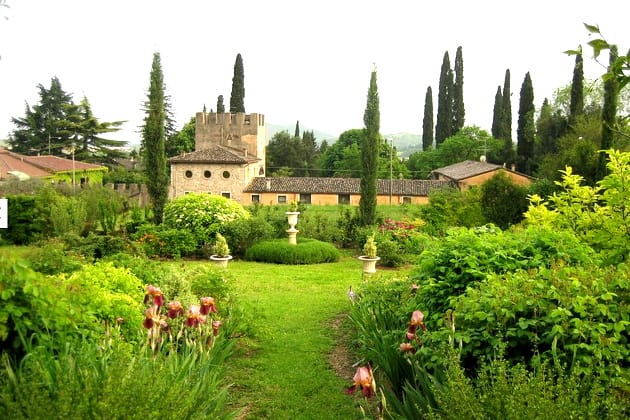 2019 Gardens Of The Italian Lake District Gardening With Charlie
 Tour Of Italy Olive Garden Picture Of Olive Garden Modesto


