
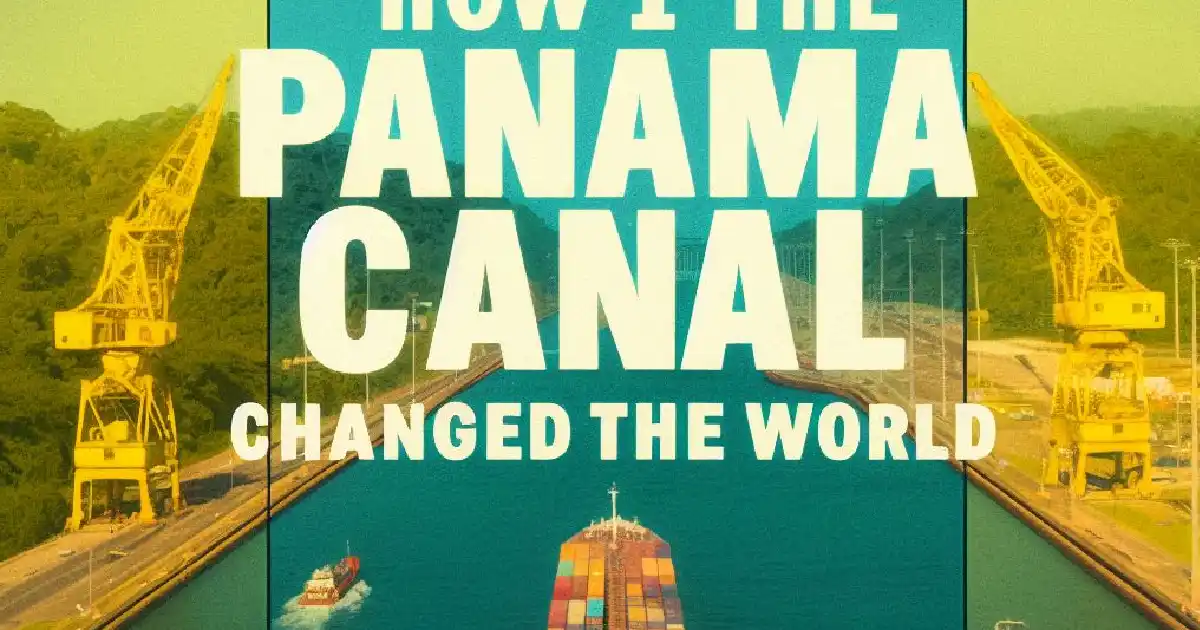
The construction of the Panama Canal stands as a remarkable feat of engineering, which has reverberated throughout history. This artificial waterway serves as a vital link connecting the Atlantic and Pacific Oceans, eliminating the need for ships to circumnavigate the southern tip of South America. Since its completion in 1914, the Panama Canal has exerted a substantial influence on global trade, geopolitics, and cultural interactions. This article aims to delve into the definition, historical significance, and lasting relevance of the Panama Canal.
An Introduction to the Panama Canal

The Panama Canal, extending over 50 miles (80 kilometers), traverses the Isthmus of Panama—a slender landmass that separates North and South America. This traversing of the isthmus involves three sets of locks, allowing vessels to be raised or lowered to different water levels. These locks facilitate the crossing of ships over the continental divide, the highest point of land in Panama. Additionally, the canal incorporates man-made lakes, channels, and dams to regulate water flow and supply.
The capacity of the Panama Canal caters to ships of varying sizes, contingent upon their length, width, and draft (the depth at which they sit in the water). The largest ships that can navigate the canal, aptly referred to as “Panamax,” possess a maximum length of 965 feet (294 meters), a maximum width of 106 feet (32 meters), and a maximum draft of 39.5 feet (12 meters). These vessels can transport up to 5,000 twenty-foot equivalent units (TEUs), representing standardized containers utilized in international trade.
In recent years, there has been a surge in demand for larger ships, particularly from Asia. These behemoth vessels, aptly labeled “New Panamax” or “Post-Panamax,” can accommodate up to 14,000 TEUs. However, these ships are too substantial to navigate the original canal. Therefore, in 2007, Panama initiated an extensive expansion project, constructing a new set of locks capable of accommodating these larger vessels. This ambitious endeavor culminated in the project’s completion in 2016, effectively doubling the canal’s capacity.
The Construction of the Panama Canal
The concept of constructing a canal across Panama dates back to the 16th century when Spanish explorers recognized the proximity of the two oceans. However, serious attempts to realize this concept only arose in the 19th century. The initial endeavor was undertaken by France, spearheaded by Ferdinand de Lesseps, renowned for his successful construction of the Suez Canal in Egypt. De Lesseps initiated the Panama project in 1881, but he encountered numerous obstacles, including engineering challenges, prevailing tropical diseases, financial predicaments, and political instability. After incurring over $260 million in expenses and losing more than 20,000 workers, de Lesseps abandoned the project in 1889.
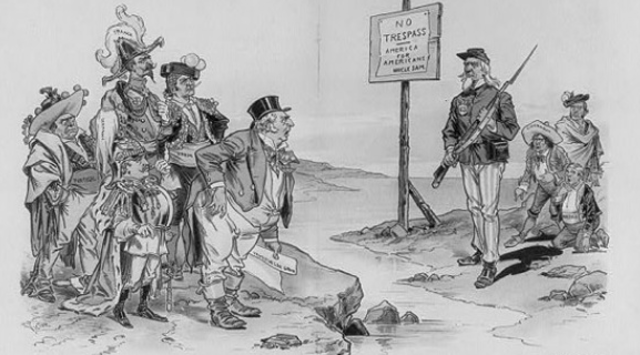
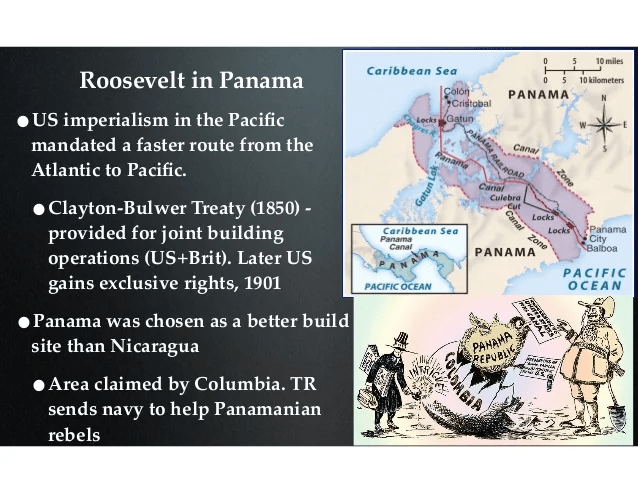
The United States, motivated by strategic interests in controlling the canal for naval and commercial purposes, undertook the second endeavor. Negotiations commenced with Colombia, the then-owner of Panama, to secure rights for building and operating the canal. However, Colombia rejected the agreement, spurring the participation of Panamanian nationalists who launched a rebellion, resulting in Panama’s declaration of independence in 1903. Subsequently, the United States signed a treaty with Panama, granting a 10-mile-wide strip of land, known as the Canal Zone, along the proposed canal route. The United States also provided Panama with $10 million and agreed to annual rent of $250,000.
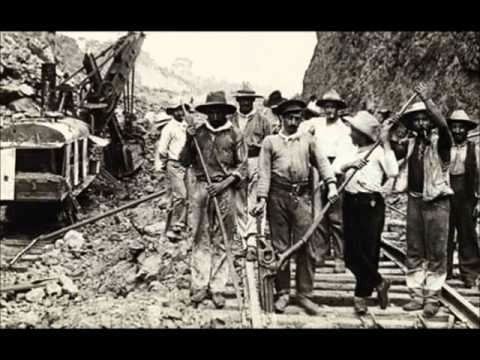
In 1904, under the guidance of John F. Stevens, and later George W. Goethals, the United States embarked on its construction project. Diverging from France’s approach, the United States opted for a lock system instead of a sea-level canal. Moreover, it improved sanitation and enhanced the overall welfare of the workers, incorporated advanced technologies such as steam shovels and dynamite, and established a highly efficient organizational and managerial structure. The United States encountered numerous obstacles, including landslides, floods, labor strikes, and legal disputes. Ultimately, the canal was completed in 1914, with expenditures amounting to $375 million and a workforce loss of over 5,000 individuals, predominantly due to accidents and diseases.
The Significance of the Panama Canal
The Panama Canal has revolutionized world trade and transportation, reducing the distance and time required for shipping goods between ports across the globe. For instance, before the canal’s inception, a ship traveling from New York to San Francisco had to undertake an arduous voyage around Cape Horn—located at the southern tip of South America—an approximately 13,000-mile (21,000-kilometer) journey taking approximately two months. With the advent of the canal, the same ship can now traverse a distance of roughly 5,200 miles (8,400 kilometers) within a two-week timeframe.
This waterway has also exerted considerable influence on global politics and cultural exchange. The strategic advantages bestowed on nations that control or utilize the canal, such as the United States, Panama, and China, are notable. Additionally, it has fostered intercultural exchanges and interactions among individuals from diverse regions and backgrounds. The canal fuels Panamanian pride while simultaneously acting as a source of conflict and controversy. For instance, in 1964, a clash ensued between Panamanian and American students over the display of flags within the Canal Zone and resulted in the deaths of 21 Panamanians and four Americans. In 1977, a treaty was signed by US President Jimmy Carter and Panamanian leader Omar Torrijos, transferring control of the canal to Panama by 1999. Subsequently, in 1989, the US invaded Panama to topple dictator Manuel Noriega, accused of drug trafficking and posing a threat to the canal. Eventually, in 1999, Panama assumed complete sovereignty over the canal and established the Panama Canal Authority for its management and operation.
To this day, the Panama Canal occupies a pivotal role in the global economy and society. Facilitating approximately 5% of the world’s maritime trade, with over 14,000 annual transits, the canal generates roughly $2 billion in revenue for Panama each year, serving as a vital economic pillar for the nation. Moreover, it supports various industries and activities, including tourism, fishing, agriculture, and research. To adapt to evolving needs and demands, the canal continuously undergoes upgrades and maintenance. The 2016 expansion project boosted its capacity by 50%, enhancing its competitiveness relative to alternative routes such as the Suez Canal or the Arctic Ocean.
Main keyword: panama canal apush definition Derivative keywords: panama canal history, panama canal expansion project, panama canal significance Relevant tags: engineering, trade, geopolitics


