
Deciding Where and When to Go to Europe – Going Everywhere You Want to Be – Europe is very large and rich with possible destinations. It was a tough narrowing of coverage, but a guidebook contains only so much space and you only have so much time in your vacation schedule. Keeping that in mind, I present the 15 must-see cities and the best of all possible side trips to provide a true, comprehensive sense of all that Europe has bid.

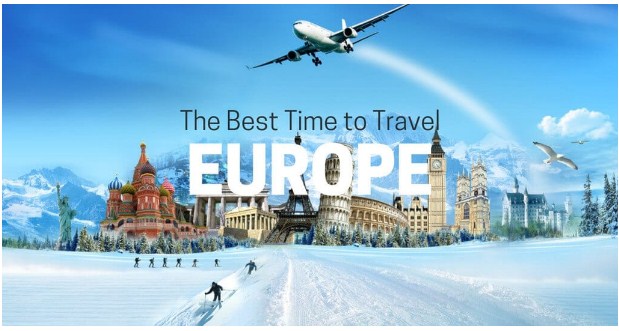
The splendors of the British Isles
The best place to start is London (see Chapter 10), the capital of the old British Empire. From the medieval Tower of London, where the wife of Henry VIII lost their heads, to the neo-Gothic hall of Westminster, where you can watch the Parliament in a fierce debate, London offers many sightseeing possibilities.
It vies with New York as a hotbed of English theater, and a museum that covers everything from Old Masters (National Gallery) and the decorative arts (Victoria & Albert Museum) the history of the navy (Greenwich Maritime Museum) and World War II (the Cabinet War Rooms ). This city contains the pomp and circumstance of the royal family and the bump and grind of the trendiest nightclubs. You can dine on everything from pub grub to Indian fare to modern fusion cuisine Britain.
easy day trips from London including Georgian splendor and Roman Bath ruins, mysterious prehistoric stone circles of Stonehenge and Avebury, the Gothic cathedral of Salisbury, and the sine qua non of the academic world, hallowed halls of Oxford University.
Edinburgh (see Chapter 11), the capital of Scotland, is a city of the dynamic university that the old city is led by one of the best palaces glowering in Europe, and the new town Georgia is a grid of courteous streets to shop and find a cheap city accommodation -house. You can haunt the pub once frequented by local children of Robert Louis Stevenson, find out about Impressionism in the Scottish National Gallery, and walk around the Royal Mile looking at the tartan scarf and impressive views (from the tour hokey whiskey to the royal Palace of Holyrood).
You can also day-trips to Inverness and look for the Loch Ness Monster of the ruins Urquart Castle, or head to occur Glasgow, a revitalization of the industrial city itself as a cultural center.
Although a visit to the Irish capital Dublin (see Chapter 12) has traction, such as admire the Book of Kells at Trinity College, exploring the history of Celtic at the Archaeological Museum, following in the footsteps of James Joyce, and scribes other Irish and pub crawling through Temple Bar, the best way to enjoy Ireland is to hire a car and traveling through the Irish countryside.
For that, I offer a lot of coverage in the Newgrange passage tomb, Celtic crosses and windswept heaths and Glendalough Wicklow Mountains, and the fishing villages and ancient sites of the Ring of Kerry and the Dingle Peninsula.
The heart of the Continent
Many people consider Paris (see Chapter 13) the mother streets of Europe. Of the works in the Louvre and the Impressionist collection from the Musée d’Orsay to climb the Eiffel Tower, along the Seine, or just whiling the day away in a café in the St-Germain-de-Pres or Marais, Paris has enough to keep you busy for a lifetime, And I have not even mentioned the bistros and brasseries, where you can sample everything from five-star cuisine in the city’s best cheap fixed price menu.
But do not take the time for a day-trip from Paris to over-the-top Versailles, one of the largest royal residences in Europe, or Chartres, one of the world’s great Gothic cathedrals and shrines since the ancient Druids.
Amsterdam (see Chapter 14) is as famous for her example of Dutch tolerance (of libido – the red light district and “smoke” cafe – seriously – Dutch houses that hide Anne Frank and her family during the Nazi occupation) due to a canal lined by home- 17thcentury townhouses courteous and artistic giants like Rembrandt and van Gogh. And do not forget the feasts of Indonesia in the Leidseplein district, rib-sticking dinner pancakes, and local brews Heineken, Amstel, and gin.
Nearby, you can sample the Dutch way less busy life in smaller cities of Haarlem or touring tulip gardens, windmills, and recreated villages in the countryside. You can also ride a bicycle for free in the Hoge Veluwe National Park with the Kroller-Muller Museum dedicated to van Gogh and another artist-modern era.
The heart beats life-loving, beer-happy Bavaria is Munich (see Chapter 15), the power generation industry is packed with a bevy of fine museums and two outstanding Baroque palace – and the host fraternity party in the world, the annual September Oktoberfest. You can munch bratwurst and pretzels in beer halls and walk around the old center and spacious Englisher Garten city park.
Munich Half the fun of traveling out of town to visit Neuschwanstein, a fairytale castle decoration Mad King Ludwig. The dark side of history here, too, of course. Just outside of Munich, the city where the Nazi Party got its start, you can tour the serious concentration camp of Dachau.
Over the Alps in Austria (see Chapter 16), you can taste the cup of the Austro-Hungarian Empire in Vienna, a city that maintains the air of the 19th century it’s smooth like no other in Europe. Steep yourself in this legacy by climbing the tower of the cathedral, sipping coffee at a famous cafe, taking in the work of the Museum Kunsthistoriches, or waiting in line for standing room tickets ($ 3) at the renowned State Opera House. Another popular destination is Innsbruck Austria, a great little town tucked away in the heart of the Austrian Alps.
After a brief visit to the Swiss capital, Bern (see Chapter 17) to admire the hometown boy works of Paul Klee, see where Einstein came up with E = mc2, feeding mascot, Bear Pits, and floating down the river with the locals, you can dig to the heart of the Swiss Alps, Bernese Oberland region around the towering Jungfrau peak. Here, a small resort town and village Alpine attached to the mighty lips and Grindlewald Lauterbrunnen Valley, surrounded by glaciers and waterfalls accessible by a thin ribbon of miles of hiking and ski trails, scenic walk cog railway, and gravity-defying cable car.
Finally, taking the plunge into Eastern Europe to see how the city works of medieval and baroque Prague (see Chapter 18) has come roaring out of the dead behind the Iron Curtain to be one of Europe’s greatest goals. Dreamy fairytale city of towers, castles, and churches is one of the world’s major centers for sampling beer and classical music. You find a large number of cheap concerts every night and in every imaginable place – from symphony playing in the great hall for the trio sounding acoustic improvisation under medieval bridge abutment.
The charm of the Mediterranean
Rome (see Chapter 19) has both ancient sites and more than 900 churches, from the Cathedral of St. Peter’s great for a small medieval chapel. City Chapter 2: Deciding Where and When to Go 19 06_575295 ch02.qxd 12/16/04 11:49 Page 19 dozens of museum houses everything from ancient Roman sculptures, frescoes, and mosaics for the work of the Renaissance. You can also see Michelangelo’s Sistine Chapel ceiling. The cityscape itself is a joy to wander, a tangle of medieval streets and streets of the Renaissance era punctuated by public squares (like Piazza Navona and Piazza del Popolo) Baroque fountain sports (like the famous Trevi Fountain), and the Egyptian obelisk.
You can also day-trip to Tivoli (home to the ruins of the villa of Hadrian and some bailey) of Ostia Antica, the ancient port of Rome.
Florence (see Chapter 20) is the birthplace of the Renaissance, with many more world-class museums and churches hangers than you can shake Michelangelo. Here you find his David, Botticelli’s Birth of Venus, Leonardo’s Annunciation, and another artistic icon. Florence is also a great place to chow down on delicious steak, good sample Italian wines, and the old neighborhood Dante wandering.
Florence is the capital of Tuscany, one of the most (deservedly) popular areas in Europe. The following Leans tower of Pisa, wineries, wine flask into Brunellos or Chiantis, and hill towns such as Siena and San Gimignano still bring the Middle Ages to life with their high towers of stone, the atmosphere is friendly, and beautifully decorated churches.
Venice (see Chapter 21) floats like a dream city in the lagoon, with ornate palaces and small footbridges jump through a network of canals. The only mode of transportation here is the boat and your own two feet. Interior sparkling St. Mark with more mosaic than you thought possible, and works of great Venetian artists, such as Titian, Tintoretto, and Veronese, cover the walls of the Accademia Galleries and Doge’s Palace.
After feasting on seafood dishes in Venice, take the public ferry to explore the remote islands of Murano (where glassblowing Venetian invented), Burano (a fishing village colorful), and Torcello (a remote island undeveloped hiding another church pretty mosaicked). And do not forget to set aside one day in mainland Veneto to see the frescoes of Giotto di Padova (Padua).
Spanish capital Madrid (see Chapter 22) also grabs you by the museum, from masterworks in the Museo del Prado to Picasso’s Guernica at the Reina Sofia. Tours Royal Palace, take in a bullfight professional or move from bar to bar sampling tapas appetizer-size before engaging in a warm 10:00 dinner and rest for a party at the club until dawn.
If you still have the energy, take a few days to explore the medieval capital city of Toledo, Rajani monastery in El Escorial (both boasting many paintings of El Greco), and the impressive roman aqueducts and Gothic cathedrals of Segovia.
Barcelona (see Chapter 23), the capital of Catalonia region of Spain, offers a great Gothic quarter to explore (Barri Gòtic), Las Ramblas (one of the most pleasant pedestrian promenade in Europe), and the great work of the early 20th century local. You find works by Picasso, Joan Miró, and especially Antoni Gaudi, who modernism take of Art Nouveau architecture appear in everything from townhomes to garden city with just great European cathedrals still (slowly) being built, his Sagrada Famiglia.
Last, but certainly not least, head into the heart of the Mediterranean, the ancient Greek capital of Athens (see Chapter 24), a vast modern city with 2,500 years the Parthenon ruins loomed over him from above the Acropolis Hill. Packed around cheap tavernas and shops lie friendly bargaining over crumbling reminders of the Greek Golden Age such as the Temple of Olympian Zeus and Temple of the Winds. highlighting the city’s archaeological museum is not only the remnants of the Classical Age but also statues of the Cycladic era and earlier age when the ancient Egyptians are the arbiter of artistic taste.
The side trip from Athens phenomenal. Visit the romantic ruins of Delphi, where the ancient world’s major prophetic advise kings and commoners alike. Or take off for the island of Santorini, a haven for sun worshipers, the beach, white wine, summer nightlife, and Minoan and Mycenaean ruins.
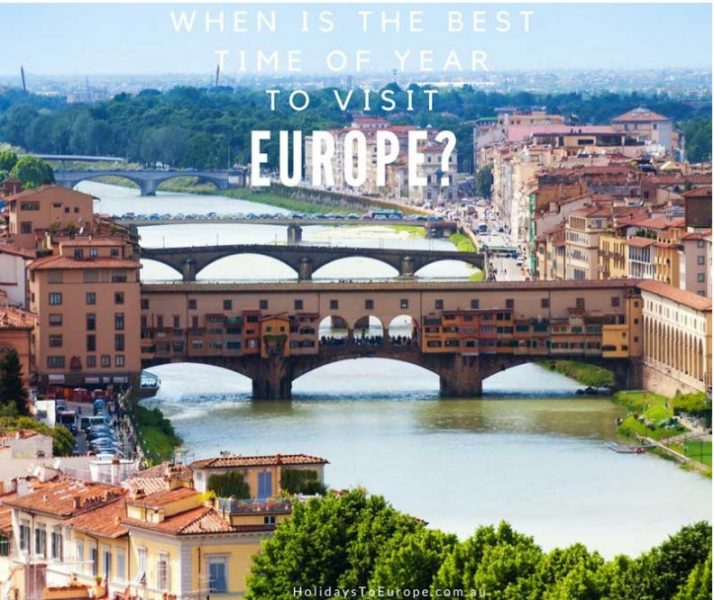
The Secret of the Seasons
Europe brings few seasonal surprises, for the most part, with weather similar to the Northeastern United States – even though you may experience a warm day, windy day in December in Sicily, or runny nose was broken in the summer in Scotland. Europe tends to be a little damp from the United States (not including the Pacific Northwest) in autumn, winter, and spring; and dry (not including Arizona and New Mexico) in summer. Rain seems to fall an awful lot in England, and the peak of the Alps never entirely lose their snow. Be prepared for all kinds of weather by packing clothes that you can layer, long underwear, a folding pocket umbrella, and lightweight clothes for warmer days.
Spring is great because…
- During this shoulder season (in between low and high season), the weather tends to be pleased mild, but unpredictable. Temperatures may still be cool enough for skiing in the Alps but already warm enough to swim in the Mediterranean. As at home, spring can be notoriously fickle, though; be prepared for rain, cold spells, heat waves suddenly, and/or the weather was perfect.
- Airlines usually offer more reasonable prices than in summer.
- Europe is not too crowded or too solitary.
- Tulips bloom in Holland and elsewhere.
But keep in mind…
- Shoulder season is becoming increasingly popular (read: crowded) as frequent travelers tire of the summer hordes and take advantage of low prices reduced.
- The off-season often runs October Easter, so in early spring, many things can still be closed – from hotels to some sights to rural tourism destinations such as vineyards or farms.
Source: nationalgeographic.com
Summer is great because…
- All the services that cater to tourists open their welcoming arms – this is the peak tourist season, with the exception of ski resorts. early summer is the most popular time to visit Europe, especially June and July.
- Colorful folk festivals, open-air music, and theatrical performances abound in early summer.
But keep in mind…
- In the summertime, Europe can feel like one giant bus tour. In fact, the biggest drawback crowd of the season.
- The highest price this year – especially for airfares and hotels, which book quickly.
- Popular museums have long lines. You may have to wait for hours to get inside at peak times.
- The temperature really heats up across Europe in August, especially in the second half of the month. Europeans go to the beaches, leaving the sweaty cities to the tourists.
- In southern climates, the heat can be unbearable all summer.
Source: nationalgeographic.com
Fall is great because…
- Most of the tourists have left.
- Mature plants and wine and harvest festivals celebrate the season.
- As in the spring, the fall shoulder season brings reasonable rates on airlines and some hotel bargains.
- The opera and concert seasons for Europe’s best company and great performance halls tend to begin in mid to late autumn.
But keep in mind
- The weather can turn on you suddenly, with lots of drizzles, and really occasional winter cold snap.
- Some tourist facilities – hotels, restaurants, and some sights – close for the season in October and November.
- The mass began to increase at this time of year as visitors try to escape from the mass of the summer.
Source: nationalgeographic.com
Winter is great because…
- During the low season (from mid or late November through Easter, excluding Christmas week), hotel and travel costs drop and you often have entire churches, museums, or even small towns to yourself.
- Christmas in Paris – or Rome, or Madrid, or Venice – can be beautiful and an experience to remember.
- You have not really skied until you’ve been to the Swiss Alps and gone downhill for more than an hour without having to catch a ride.
But keep in mind…
- You may not want to spend your holidays wrapped up, protect yourself from the cold.
- Tourism destinations tend to freshen up during this period of calm. Museums review and reorganize their exhibits. Churches and monuments undergo restorations or check. And local transportation, tourism offices, and shops shorten their hours, while some restaurants and hotels close for a week or even a month.
- Some of the most popular destinations, such as islands, smaller city-based tourism, and spa, near almost entirely
Source: nationalgeographic.com
Europe’s Calendar of Events
A great way to tour is to plan a whole vacation around a single large festival. Although the traditional sights of a particular location may be closed, especially in small towns, just attending the festival can be a great vacation. You can watch a slice of European life most tourists never get to see. Celebrate the festival with the locals, take tons of pictures, and make some unforgettable memories.
Book your accommodation as soon as possible if your plans include a trip to a location where a large festival or other cultural events take place. Participants grab a quick accommodation during the festival, sometimes months in advance. For big festivals in places that are smaller, such as the Palio in Siena, Italy, all the hotels within the city walls may be sold out more than a year earlier. If necessary, book a room in a neighboring town.
Here is a subjective list of the top ten festivals in Europe. Country guidebooks, such as Frommer’s (Wiley), list many, many more festivals. For specific dates or more information, contact the local tourist office (see “Fast Facts” section of Chapter 10 through 24 to register) or visit the event Web site (if registered).
- Carnevale, Venice, Italy (and just about everywhere else): Carnevale is a feast of food and wine and a raucous celebration of spring – a veritable period of grafted pagan efficiency on the previous week Christian Lent. Carnevale turns the world upside down: The lowly hobnob with the elite, and everyone has a good time roaring. The famous Christian world Carnevale (called “Carnival” in Rio and “Mardi Gras” in New Orleans). The most famous festival in Europe, however, is Carnevale (Carnival-www.venice. Com) of Venice, a series of still drunk elegant masked balls reminiscent of the 18th century Casanova. But you will find celebrations rich in events throughout Europe. You can see chariot parades and a wild bacchanal in the Greek city of Patras; the solemn burial of a sardine can in Madrid, Spain; political satirical floats in the port of Livorno, Italy; and flower battles and bonfires in Nice, France. Carnevale starts a week or two before Ash Wednesday (usually in late February) and culminates on Tuesday, called “Shrove Tuesday” (Mardi Gras in French). Shrove Tuesday immediately precedes the sober period of Lent.
Source: nationalgeographic.com
- Shakespeare season, Stratford-upon-Avon, England: The theater fans relish this experience. The Royal Shakespeare Company (www.rsc.org.uk) performs its season here, where Shakespeare was born and where he also retired. You can buy tickets in advance on its website. The season runs from February to October.
Source: www.rsc.org.uk
- Easter, throughout Europe: In London, you can see the parade of colorful floats around Battersea Park. You can hear hooded processioners sing love songs to the Virgin Mary in Seville, Spain. In Florence, you can watch a cart pulled by a beef stuffed with fireworks explode in front of the cathedral. Celebrations vary widely between Good Friday and Easter Monday; Easter falls approximately in late March or early April.
Source: rove.me
- Palio, Siena, Italy: One of the highlights of the Italian summer is this breakneck, bareback, all horses will race around the sloping main square of dirt covered the medieval city of Siena. Even a horse that has thrown its rider (not uncommon) can take the price and whips are used as much on the other riders on horses. The parties held before and after the horse race are street feasts to behold, no matter who wins. The horse race occurs twice each summer, July 2 and August 16.
Source: nationalgeographic.com
- Running of the Bulls (www.sanfermin.com), Pamplona, Spain: One of the most dangerous festivals you can see is one where a crazy Courageous white dress with red kerchiefs and run while enraged bulls chase the in the narrow streets of Pamplona. The wild chase ends when the bulls chase the last runners in the harbor, after forcing most of them to jump the security fences. After that, drink a lot of wine involved, put on fireworks, and, of course, attend bullfights. You can enjoy the event vicariously by reading Hemingway’s The Sun Also Rises or see yourself from July 6 to 14.
Source: www.sanfermin.com
- Bastille Day, Paris, France: France celebrates its nation’s birthday with street fairs, parades, festivals, and pageants, starting with a procession along the Champs-Elysees and ending with a fire of fireworks over Montmartre. Bastille Day is July 14.
Source: nationalgeographic.com
- Edinburgh International Festival and the Fringe Festival, Edinburgh, Scotland: One of the leading cultural extravaganzas in Europe, the festival features art, dance, film, games, and music from some of the best creative talents and interpreters of the world. Traditional bagpipes and kilt Military Tattoo at the castle is the highlight of the festival. The Edinburgh International Festival (www.eif.co.uk) takes place over three weeks in August and early September. The Fringe Festival in August (www.edfringe.com) started as a small experimental offshoot to the main festival, but during the last decade, it has exploded in popularity (and ticket sales, topping 1 million in 2003) and account today over 1,500 shows and events – compared to 111 offered as part of the Edinburgh Festival in 2004. Official anyway, August is a great time to be in Edinburgh.
Source: www.thesun.co.uk
- Bloemencorso, Amsterdam, Netherlands: This major flower festival takes place in a country obsessed with flowers. The event begins with a colorful parade of floats in the market town of flowers near Aalsmeer and ends on Amsterdam’s Dam Square. And get this – tulips are not included. The festival (% 029-793-9393) takes place on the first Saturday in September.
Source: www.noordwijk.info
- Oktoberfest, Munich, Germany: Welcome to the world’s biggest keg party! This festival attracts tens of thousands of people who listen to brass bands oompah, watch as a whole ox roast on a spit, and sit under giant tents drinking liter-size mugs of beer. (I’m told that 5 million liters of beer are consumed here nearly every year.) Oktoberfest (www.oktoberfest.de) actually begins in mid-September. The first weekend in October is the final flourish
Source: oktoberfest.de
- Christmas in Europe: You can enjoy the Christmas fun and festivities throughout Europe a few weeks before the holiday until January 6 (Epiphany). Christmas is not completely commercialized in Europe, luckily. Look closely and you can see creches (nurseries) in public squares and church chapels across the continent. Some of these cribs are life, some ultratraditional, and other postmodern. I love those of Naples, where the holy manger seems an insignificant detail in a very Italian Bethlehem, with pizzerias. On Christmas Eve, you can go to Oberndorf, north of Salzburg, Austria, to sing Silent Night in the city where the song was written. Or you can receive the blessing of the Pope on Christmas Day when he looks at his window in Rome at noon to give a mass blessing broadcast around the world.
Source: nationalgeographic.com
Tips for Successful Trip Planning
When planning your trip — both the whole trip and the daily schedule — make sure to leave room for downtime, changing plans, and spontaneity:
- Make time for relaxation. For every 10 to 15 days of rigorous sightseeing, plan at least 2 days for doing little or nothing.
- Mentally prepare yourself for those inevitable changes in your plans. You never know when circumstances will cause you to miss a train, for example. Try to rethink your unlucky situation in order to make the most of your new circumstances.
- Be spontaneous. Take advantage of unexpected opportunities, such as day trips or festivals, and don’t be scared to spend more or less time in a place after you get to know it.
Often, tourists are returning to Europe for a second or third visit discover that they can see many sights outside major cities by renting cars and staying in villas. They can go hill-town-hopping and explore one tiny corner of Europe at a time, allowing them to travel with a relaxing away from the hustle and stress of big cities. But on your first visit, you may want to visit a lot major cities and sights as possible, and there is nothing wrong with it.
A whirlwind tour is still the best way to sample all the offerings of Europe during your first trip. You can get the “required” sights out of the way, so when you come back (and you’ll be back), you can concentrate on lesser-known attractions or explore the area in depth.
Seeing it all without going nuts
The idea of planning a large-scale trip can seem overwhelming — so much history and culture, so little time! Here are six ways to maximize your time and still see as much as possible:
- Do not duplicate types of sights. You know that many sights in Europe are unique and worth seeing in their own right. But let’s face it: Visit some royal palaces or a famous Gothic cathedral, and they all start to look the same. Pick one or two examples of each and move on.
- Staying in the city center. Use your limited time to see as much of Europe as you can, rather than take a day to travel to a peripheral corner, especially on your first trip. Think about skipping some more geographically distant countries, such as Scandinavia, Portugal, Spain, and especially Greece, because – unless you take advantage of no-frills airlines – traveling to them takes forever. See Section III through V to help you choose destinations that keep this idea in mind.
- Select side trips carefully. I highly recommend a day trip because they usually add variety. But pick your excursions wisely, and make sure that this trip did not take time away from the big city you visit. If you are in Florence for just one day, do not plan to see Pisa, because you will end up looking not. Reserve a full day to see the destination more than a city bus ride away.
- Split you. If you plan six days in London to accommodate the desires of the streets of each member of the family, you’re wasting time unnecessarily. You do not need to tour Europe as Siamese triplets. Your partner can spend a few hours in the British Museum and your kids can take a tour to Windsor Castle while you check out Shakespeare’s Globe Theater. That way you all spend a single afternoon doing what otherwise would take one and a half days.
- Practice extreme time-saving techniques. No matter how beautiful the countryside trip, you can save a lot of precious holiday time by taking night trains between major cities that do not use a whole day just getting from Point A to Point B, although this may not be the most convenient way to spend an evening, Since you arrive at your destination so early, this strategy also allows you to visit the museum before the crowds arrive; You can always take a nap later.
- Know that you are probably going to come back. Consider it. Europe is still much left to see, no matter how much you pack in. Europe will be waiting for you.
Staying sane on the museum trail
Europe has to produce enough output history and art over the past millennium, and you may feel like you’ve seen it all during your vacation ends. This guide can help you get the most out of your visit to the major museums without overloading your brain:
Source: nationalgeographic.com
- Plan to go to big museums twice. Spread the visit over several days, if you have time and inclination because some museums are too large to pass through in one day. Consider this strategy for the Louvre, the Prado Museum, The Museum of the Vatican, the British Museum, the Uffizi, and the National Gallery (London).
- Pull apart. Nothing is as subjective as taste in art. You and your colleagues do not have to stick together in museums and spend all your time looking at the same paintings. You can go through each at their own pace and read their own pleasures if you part ways at the front door and set a time to meet. This strategy also gives you and your companions some time apart. (Even the closest of friends and family can get on each other’s nerves.)
- Try the audio tour. Audio guides in museums have become quite sophisticated. No longer have to deal with these guidelines audio cassettes just understandable that make everyone go in a big group from one work to another. Now, most audio tours are digital and go at your own pace. The exhibited works have numbers on their side, they just drilled on the keyboard wand. Then it gives the facts and background of the work, artist, era, and so on. You can just press Stop when you want and continue with the following table. In this way, the truth works that intrigue is obtained only.
- Do-guided tour. Most museum tours are led by certified experts who explain the background and significance of the most important works and can answer all your questions.
- Do your homework. When you have informed yourself as to what you are seeing, art can be much more attractive and interesting. Whether you read your guide for information or take a class in art history before your trip, a little brushing up on European artists and movements can enrich any museum experience course.
- Create your own story. Look for details in the mood the artist included, and try imagining dialogue next to the figures of the canvas. Any large canvas of a courtly scene or a banquet usually features details like two servants getting frisky with others in the background, or a monkey and a dog looking warily under the table. Most people have a little claw after too many hours spent soberly contemplating creative genius. Feel free to make up stories to go with the scenes.
- Keep the museum hours in mind. In the hours after, empty museums, especially the big museums that may stay open until 7 or 8 p.m. In summer, some museums may stay open until 10 p.m. or even midnight. If you’re a fan of museums and postcards and plan to stay until closing, check to see when the gift shop closes. Gift shops often close 30 minutes before the museum closes.
- Spend your time on the masterpieces. Even a moderate size museum can overwhelm if you do not pace yourself. Do not feel compelled to see everything. Many museums include a list of the masterpieces on their floor plans, and you can skip whole wings that do not feel like going through.
Dealing with cultural overload
French writer Stendhal, while visiting Florence, was so overwhelmed by the aesthetic beauty of the Renaissance – and so exhausted trying to see absolutely everything – that collapsed. Stendhal’s case is an extreme, perhaps, but he is not the last to break down excess Europe.
Even if you do not pass out in the square, after a few days or weeks of touring Fullsteam approval, it may become irritable and tired, catch a cold, or just stop caring whether you see another Giotto fresco in that church. When the idea of visiting the Louvre does more than moan and want to take a nap, it’s time to recharge your mental batteries.
Check out these tips to remedy the depletion of the traveler:
- Just because something is famous, do not feel obligated to do or see it. If you’re going to wear yourself out, do the things you like. Feel free to skip what does not interest you and go see what really floats your boat.
- Own pace. Go a little at a time to absorb a variety of cultural offerings of Europe. Schedule time off. I say again what is worth repeating: Leave room to picnic, to breathe, and to stop and smell the cappuccino. Do not pack too much into either your trip itinerary or the agenda of your daily walks.
- Put variety into your sightseeing. Visit a church, ruin, or park, or relax in a cafe in between sights. Do not hit one big museum after another. Give other areas of your brain exercise for a while. All your trips are not then blurred into one big, colorful mirage of Gothic cathedrals and old masters from which your memory can not distinguish where Prague left off and Paris began.
- Do the siesta. In Mediterranean countries, almost all businesses are closed in the afternoon, so why not do like the Europeans do: Take a nap! A nap in the middle of the day can do you a world of good, both physically and mentally. You can take a riposo along with the Italians, and you will not only appreciate the culture more but also can solve the streets in Florence that Stendhal started.
- Take a break when the roads start to get to you. Anything to bring your cultural appreciation back from the brink, do it. Take a day to get off the beaten path. Go shopping. Going to a football match. But stop trying to rack up the points outing. Sit down and write postcards. Chances are you’ll get psyched to get back on the streets wagon after describing to your friends back home once in a lifetime experience you’ve had.
How to Schedule Your Time
The table below gives you an idea of the minimum amount of time that’s needed to “see” Europe’s major cities. This schedule allows time to settle in, visit the major sights, get a taste for the place, and maybe go on one day trip.
| City | Amount of Time |
| Amsterdam | 2 to 3 days |
| Athens | 1 to 2 days |
| Barcelona | 2 to 3 days |
| Bern/Alps | 1 to 3 days |
| Dublin | 1 to 2 days |
| Edinburgh | 1 to 2 days |
| Florence | 2 to 3 days |
| London | 3 to 4 days |
| Madrid | 2 to 3 days |
| Munich | 1 to 2 days |
| Paris | 3 to 4 days |
| Prague | 2 to 3 days |
| Rome | 3 to 4 days |
| Venice | 2 to 3 days |
| Vienna | 1 to 3 days |
Remember to add on at least one extra day for each overnight side trip you want to take. Also, try to stay longer in some of the major cities, such as London, Paris, or Rome — you won’t run out of things to do.
Deciding Where and When to Go to Europe…


