
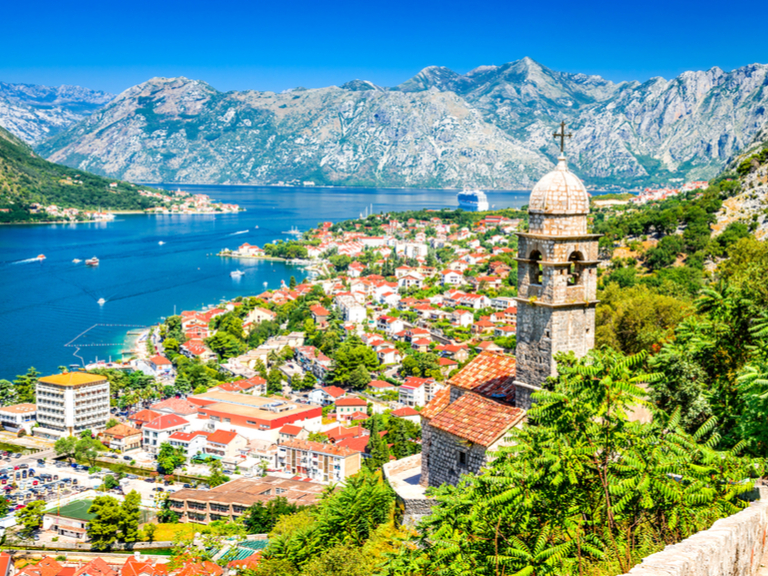
The Balkans are the historical and geographical names used to describe South-Eastern Europe. This area covers a combined area of 550,000 km2 and a population of about 53 million. The mountainous Balkan region stretching from central Bulgaria to eastern Serbia


The Balkans, also known as the Balkan Peninsula, have names in the following regional languages:
- Albanian – Ballkanik Gadishulli
- Bosnian – Balkansko Poluostrvo
- Bulgarian — “Balkanski Poluostrov”)
- Croatian – Balkanski Poluotok
- Macedonian -Balkanski Poluostrov
- Romanian – Balcanic Peninsula
- Serb (Balkansko Poluostrvo)
- Slovenian – Balkanski Polotok
- Turkish – Balkan Yar-madas
- Greek – “Valkanik” (Valkanik- Chersenisos)
The Balkan Peninsula
Sometimes the Balkans refer to the Balkan peninsula which is surrounded by the Adriatic Sea, Ionia, Aegean, Marmara and the Black Sea of the southwest, south and southeast.
Where there is no model peninsula because it does not have the isthmus to link it to continental Europe, this definition is often used to indicate a larger area.
A clear introduction to the Balkans provides as much general history as decomposition and rigour on mountainous geography. This region was eternally on the border of a great empire, its history was dominated by war, upheaval, invasion and aggression between empires, from the Roman Empire to the last war of Yugoslavia.
The tendency to secede in the competition of political entities gives rise to the term balkanization (or membalkankan). The term Balkan generally implies a relationship with violence, religious conflict, ethnic unity and understanding of the interior.

Balkan South-East Europe
Because of the connotation of the term “Balkan”, many people prefer South-Eastern Europe. Slowly the use of this term is growing; The 1999 EU initiative was called the Stability Pact for South-Eastern Europe and the online newspaper Balkan Times itself was called the Southeast European Times in 2003.
The use of this term to interpret the Balkan Peninsula (and only this one) technically ignores the geographical presence of Western Romania and Ukraine, also located in south-eastern Europe.
The northern border of the Balkan Peninsula is generally considered to be the line formed by the Danube, Sava and Kupa rivers and the segment linking Kupa to Kvarner Bay.
There is also another definition of the northern Balkan border:
- The Krka Line (Slovenia River) – Vipava – the northern border of the Gulf of Trieste
- Dniester Line – Timiaoara – Zagreb – Triglav (mountains).
- Sava Line – Ljubljansko polje – Idrijca River – Soa River.
Balkan Peninsula (by definition Danube-Sava-Kupa Line)
The most commonly used northern border of the Danube-Sava-Kupa is used in a physiographic feature, can be easily identified on the map. Historically justified by the fact that the so-called area (along with Romania and Montenegro, Dalmatia and the Ionian Islands) was largely a European territory of the Ottoman Empire dating from the late 15th to 19th century. divides Croatia and Serbia and the Danube, which are the second largest river in Europe (after the Volga), forming natural borders between Bulgaria, Serbia and Romania. To the north of the line is the Pannonian plain and (in the case of Romania) the Karpathia Mountains.
Although Romania (with the exception of Dobrudja) is not part of the geography of the Balkans, it was classically included as the “surrogate state” of the former Ottoman Empire. Romanian culture contains many elements of the Balkans and the Romanian language, including the Language Union of the Balkans.
Depending on the commonly used border, Slovenia extends north of the Balkans and is considered part of Central Europe. Historically and culturally, it was also more related to Central Europe, although Slovenian culture also included elements of Balkan culture.
However, as indicated, the northern border of the Balkan Peninsula can also be traced differently, which may also include at least part of Slovenia and a small part of Italy (Trieste province).Slovenia kadang-kadang juga dianggap sebagai negara Balkan sebab asosiasinya dengan mantan Yugoslavia. Saat Balkan dideskripsikan sebagai daerah geopolitik abad ke-20, seluruh Yugoslavia termasuk (maka, Slovenia, Istria, Kepulauan Dalmatia, bagian utara Kroasia dan Vojvodina masuk juga).
This historical justification for the northern border of Sava-Kupa generally prevents the inclusion of Croatia (whose territory belonged to most of the Habsburg monarchy and the Republic of Venice during the conquest of the Ottoman Turks). Other reasons, including previous history and culture, link Croatia, such as Slovenia, to Central Europe and the Mediterranean region more than to the Balkan region. However, its distinctive geographical shape has become a feature that brings it together with the regions of Bosnia and Herzegovina, such as recent history with Yugoslavia, etc.
Latest general definitions of the Balkans
In most languages of the Western English world, countries that generally include the Balkans include:
- Albania
- Bulgaria
- Bosnia and Herzegovina
- Croatia
- Republic of Macedonia
- Montenegro
- Serbia
- Slovenia
- Turkey, but only the European parts of it include Istanbul (traditionally called Rumelia or Thrace Timur)
- Greece
Romania also sometimes enters this list. Many parts of this country that are registered as Balkan countries can become in many ways quite clear from the rest of the region. Therefore, countries where border lines (often far from the Balkan mountains themselves) are generally designated as Balkan countries. The main examples are Romania and Slovenia, sometimes also Croatia and Greece.
Other countries not included in the Balkans are close and/or play or have played an important role in the geopolitics of the region, its culture and history:
- Cyprus (Southern Europe)
- Hungary (Central Europe)
- Austria (Central Europe)
- Italy (Southern Europe)
- Russia (North Asia / Eastern Europe)
Nature and natural resources
Most of these areas are mountain ranges that extend from the southwest to the northeast. The main line includes the Dinarik Alps in Slovenia, Croatia and Bosnia, the mountains of Ar stretching from Albania to the Republic of Macedonia and the Pinde Range, stretching from southern Albania to central Greece. In Bulgaria, there is a line from east to west: the Balkan mountains and the Rhodope Mountains on the border with Greece. The highest mountain is Musala (2925 m) on Mount Rila, in southwestern Bulgaria.
On the coast, the subtropical climate is humid, Mediterranean and oceanic, in a moderate continental interior. In the northern part of the peninsula and mountains, the snow season is frigid and snowy, while spring is hot and dry. In the south the winter is cooler.
For centuries, much wood has been cut and replaced by shrubs. To the south and on the coast, there is green hardwood vegetation. Inside, there are species of Central European wood (oaks and cypresses, in the mountains). 3 lanes in the mountains extend to an altitude of 1800-2300 m.
In general, the land is barren, except on those where areas of natural grass, fertile soils and hot summers offer opportunities for agriculture. Elsewhere, land cultivation fails mainly because of mountains, hot summers and barren land, although other plants such as olives and grapes flourish.
Energy sources are scarce. There are several coal deposits, notably in Bulgaria, Serbia and Bosnia. Young coal deposits are more widespread. Oil is scarce, but there are a small number of deposits in Serbia, Albania and Croatia. Natural gas deposits are also rare. Water-fired stations are used extensively in energy.
Metal ore is more common than other raw materials. Iron ore is rare, but in some countries there is a large amount of copper, zinc, tin, chromium, manganese, magnetism and bauxite. Some metals are exported.

Details of the 10-day package take advantage of the beauty of the Balkan Peninsula
Day 01: Meeting point – Doha / Istanbul (transit) (MOB)
To get to Istanbul, transit from Venice using the Turkish Airlines plane. The plane took off at night and arrived at Istanbul Ataturk International Airport the next day.
Day 02: Doha / Istanbul – Venice Marco Polo Int’l – Venice – Koper (MOB / L / D)
After about 2-3 hours of transit, the journey continues between Istanbul and Marco Polo International Airport in Venice, Italy. Arriving in Venice, you will be immediately taken care of by the guide and head directly to the restaurant for lunch. Then head to the city of Venice by visiting Piazza San Marco (classic Italian architectural building), St. Mark’s Basilica (a classical white church with golden accents and five domes inspired by Byzantine architecture), the Grand Canal (icon of Venice, its shape resembles the letter S and is decorated with several bridges built in the 12th century.), Bridges in Venice (Ponte Degli Scalzi Bridge, Rialto Bridge and Ponte Dell’Academia Bridge, the most beautiful wooden bridge. Become a charming place of photography and become a pedestrian link.), and finally the Market of Rialto (traditional market in Venice offering different types of fruits, vegetables and snacks). From Venice, we will travel to Koper, Slovenia, for hotel check-in, dinner and dinner. to rest.
Day 03: Valise – Rijeka – Zadar (B / L / D)
After breakfast at the hotel, you will start with the city of Koper, the oldest and fifth largest city in Slovenia. We will visit Tito Square (the field or square in Slovenia, named after the first Slovenian president), the pretorian palace (currently, the palace is used for government buildings and wedding reception buildings, built in the 15th century in Gothic style) After that, we will have lunch in a local restaurant with the Assembly of Islamic Organizations of the city of Koper with a cultural show. The President of the Islamic Organization of the city of Koper will attend the ceremony. We will then head to the city of Rijeka, Croatia, which is a port city with tourist sites like beaches, shops and the most important is the Islamic center of Rijeka. The peculiarity of this Islamic center lies in the fact that the building resembles the Keong mas theatre of TMII. Once the visit is over, we will return to Zadar, Croatia, for dinner and rest.
Day 04: Zadar – Makarska – Mostar (B / L / D)
Breakfast at the hotel, then begin the tour of the city of Zadar by visiting The Sea Organ (an object of its architectural located in Zadar, Croatia, and experimental musical instruments, which play music through ocean waves and tubes located under a set of large marble staircases. ), then visit Katederal Zadar (a Catholic cathedral located in Zadar, Croatia, in the centre of the Archdiocese of Zadar and the largest church in all of Dalmatia (coastal region of Croatia). Once the tour is over, head to the city of Makarska for prayer, lunch and pictures in the city of Makarska. Then the journey continues to the town of Mostar, Bosnia, to check in and rest.
Day 05: Mostar – Sarajevo (B / L / D)
Today we will visit the city of Mostar, the most beautiful old city in Bosnia and Herzegovina. Visit the old Stari Most Bridge (built by the Ottoman Empire in the 16th century). It is one of the most well-known symbols of the State of Bosnia and Herzegovina and is also considered the finest masterpiece of Islamic architecture in the Balkans. ), The Cejvan Cehaj Mosque (1552) (is the oldest mosque in the city of Mostar. A madrasa was built in the same complex), The Old Bazaar, Kujundziluk (the old name of the market comes from the name of a traditional steward and sells it to Jalan In this former market, sellers can still find original paintings and objects bronze representing Stari Most), the Koski Mehmed Pasha Mosque (1617) (open to the public. Visitors can enter the mosque and take pictures without having to pay. Near this mosque you will find the Tepa market, still crowded since the reign of the Ottoman dynasty), you will have the opportunity to talk The mostar souvenir shop Finally, visit Buna in Blagaj Tekija, a beautiful place for Sufis. After that, we will pray and have lunch in Mostar, and the journey will continue to Sarajevo, Bosnia. When you arrive there, you immediately check in at the hotel and rest
Day 06: Sarajevo Fullday (B / L / D)
Today you are in the capital of Bosnia and Herzegovina, Sarajevo. Located on the outskirts of the Miljacka River, surrounded by the Dinaric mountains that stretch from northwestern Italy through Slovenia, Croatia, Bosnia and Herzegovina, Serbia, Montenegro and Albania to the southeast. The tour begins with a visit to Trebevic Mountain to enjoy the beauty of Sarajevo in the morning using a cable car for 40 minutes. Continued visit of Srebenica, a mass grave of Bosnian Muslims, for two hours. Pilgrims can visit the Srebrenica-Potocari Genocide Memorial and cemeteries a few kilometres from a village in Potocaro. Then have lunch at a local restaurant, pray and discuss the Srebrenica tragedy for about two hours, take pictures and exchange memories. After today’s visit, we will return to the hotel for dinner and rest.
Day 07: Sarajevo – Travnik – Sanski Most (B / L / D)
Today we will be the second round of the city of Sarajevo by visiting the Sarajevo History Museum (containing the history of Sarajevo from 1878-1918, which includes the assassination of Prince Franz Ferdinand in 1914, which triggered the First World War), then there was the Latin Bridge, the Old Town and Bazzar in Bascarija, as well as the Gazi Husrevbegova Mosque (a mosque built in the 16th century by the long-standing Ottoman dynasty and became one of the best buildings ever built by the Ottomans in the Balkans), the old Orthodox church (the oldest Orthodox church in Sarajevo, dedicated to the angel of Michael and Gabriel), the Cathedral of the Sacred Heart and the Sephardic Synagogue (is a Jewish place of worship built in 1581 with the help of Beylerbey Sijamush Pasha, Turkey, to help a very poor Jewish community in the city of Sarajevo, after this lunch and prayer. Then the journey continued to the city of Travnik, Bosnia, and visited the Serena Mosque (1816) (also known as the Sulaiman Mosque, as it was created during the reign of Solomon Pasha Skopliak (Ottoman). Tower of Travnik and Blue Water (Plava Voda). We will go to the city of Jajce for lunch and prayer, then we will go to the city of Sanski Most for dinner and rest.
Day 08: Sanski Most Fulay (B/L/D)
On this day, you will encircle the entire city of Sanski Most, which is the center of Islamic civilization at the time of Sultan Mehmet Al Fatih. We visit the Hamzibegova Mosque (built around the 16th century and is the oldest mosque in the city of Sanski Most, after the war of 1991 was built kemabli and now very beautiful), then the mosque and monument Sultan Mehmet Al Fatih. We will also see the beauty of the Bliha waterfall and the Sana River (the largest city of Sanksi is called the river town, as the beautiful and clear Sana River runs through the small town of 50,421 inhabitants). After the visit, we will have lunch at the local Restaurant Sanski Most and attend traditional dances. Then pray and continue with the appearance of the traditional culture of Sanski Most. After that, the program was free and continued with dinner and local cultural performances.
Day 09: Saturday, September 29. Sanski Most – Zagreb – Venice Marco Polo Int’l – Doha / Istanbul (B / L / MOB)
After breakfast, then head to the city of Zagreb, Croatia, then head to the local restaurant and pray. Then head to the city of Ljubljana to visit the city and head straight to Kopta Venice for tea and to the airport to return to your country.
Day 10: Arrival in your country
You’ve arrived in your country. Thus, Semananjung’s trip to the Balkans. Good trip. Your trip.


