

 Seven Wonders Of The World Original- What Are The Seven Wonders Of The World Seven Wonders Group Travel. Seven Wonders of the World, preeminent architectural and sculptural achievements of the ancient Mediterranean and the Middle East, as listed by various observers. The best known are those of the 2nd-century-BCE writer Antipater of Sidon and of a later but unknown observer of the 2nd century BCE who claimed to be the mathematician Philon of Byzantium. Included on the list in its eventual form were the following:
Pyramids of Giza is the oldest of the wonders and the only one of the seven substantially in existence today.
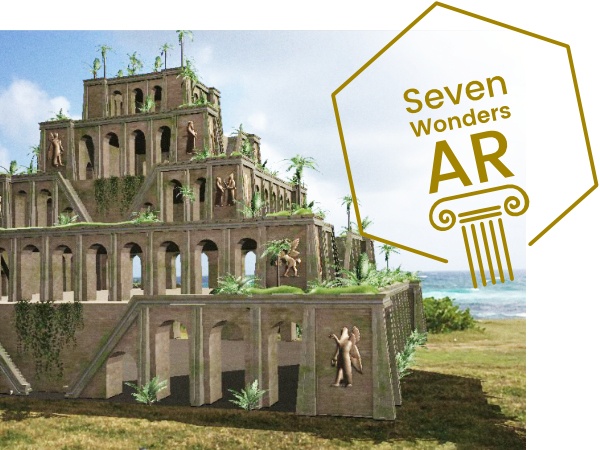
Hanging Gardens of Babylon, thought to be a series of landscaped terraces, exact location unknown, generally ascribed to Queen Sammu-Ramat, King Nebuchadrezzar II, or the Assyrian king Sennacherib.
The Statue of Zeus at Olympia, a large ornate figure of the god on his throne, was made about 430 BCE by Phidias of Athens.
Temple of Artemis at Ephesus
Temple of Artemis at Ephesus, a structure famous for its imposing size and for the works of art that adorned it.
Colossus of Rhodes, a huge bronze statue built at the harbor of Rhodes in commemoration of the raising of the siege of Rhodes (305–304 BCE).
Mausoleum of Halicarnassus
Mausoleum of Halicarnassus, monumental tomb of the Anatolian king Mausolus built by his widow Artemisia.
Pharos of Alexandria, the most famous lighthouse of the ancient world, was built for Ptolemy II of Egypt about 280 BCE on the island of Pharos off Alexandria.
Some early lists included the Walls of Babylon or the Palace of King Cyrus of Persia in place of one of the sites noted above.
Did the Seven Wonders of the World actually exist?
The seven wonders of Greco-Roman antiquity inspired the compilation of many other lists of attractions, both natural and human-made, by successive generations. Among such lists, all of which are limited to seven “wonders,” are the (architectural) wonders of the Middle Ages, the natural wonders of the world, the natural wonders of the United States, the (architectural) wonders of the modern world, and the wonders of American engineering.
Colossus of Rhodes, a colossal statue of the sun god Helios that stood in the ancient Greek city of Rhodes and was one of the Seven Wonders of the World. The sculptor Chares of Lyndus (another city on the island) created the statue, which commemorated the raising of Demetrius I Poliorcetes’ long siege (305 BCE) of Rhodes. Made of bronze and reinforced with iron, it was weighted with stones. The Colossus was said to be 70 cubits (105 feet [32 meters]) high and stood beside Mandrákion harbor, perhaps shielding its eyes with one hand, as a representation in relief suggests. It is technically impossible that the statue could have straddled the harbor entrance, and the popular belief that it did so dates only from the Middle Ages.
The statue, which took 12 years to build (c. 294–282 BCE), was toppled by an earthquake about 225/226 BCE. The fallen Colossus was left in place until 654 CE when Arabian forces raided Rhodes and had the statue broken up and the bronze sold for scrap. Supposedly, the fragments totaled more than 900 camel loads.
What Are The Seven Wonders Of The World From Ancient To Mode
The 7 Wonders Of India Worldatlas Co
New Seven Wonders Of The World Taj Mahal Machu Picchu And More
 The Seven Wonders Ancient History Encyclopedia
 The New Seven Wonders Of The World Civfanatics Forums
Tags: seven wonders of the world original, seven wonders of the world original list, what are the original seven wonders of the world today, original seven wonders of the ancient world, original seven wonders of the world still in existence, original seven natural wonders of the world, seven wonders original 7 wonders of the world, original man-made seven wonders of the world, pictures of the original seven wonders of the world, name the original seven wonders of the world, seven natural wonders of the world’s original


