

 6 Summer Destinations In Davao Oriental Sunstar
It’s geographically positioned in the front of Davao del Sur and grouped under the front by the Philippine Statistics Authority, but the megalopolis is governed and administered solely from it. The megalopolis is divided into three congressional quarters, which are subdivided into 11 managerial quarters with a summation of 182 barangays.
Davao City is the center of Metro Davao, the third-most aboil metropolitan area in the Philippines.
The burg serves as the main trade, commerce, and assiduousness central of Mindanao, and the domestic center of Davao Region. Davao is home to Mount Apo, the top mountain in the Philippines. The burg is also nicknamed the”Durian Capital of the Philippines” and”Chocolate Capital of the Philippines”.
Nationalities in Davao City
Denizens of Davao City and the whole corresponding Davao Region are colloquially known as Davaoeños. Nearly all nonindigenous Davaoeños are Visayans (the adultness are Cebuanos, with the rest being Hiligaynons), while others of different nations inclusively distributed as the Lumads make up the remainder of the nonindigenous population.
The Moro groups of the megacity are the Maguindanaons, Maranaos, Iranuns, Tausugs and the Sama-Bajaus. Non-Filipino Asians corresponding as Indonesians, Malaysians, Taiwanese, Chinese Filipinos, Koreans, Japanese, and Indians have settled and made small communities in Davao City. Non-Asian outlanders corresponding as the Americans and Europeans are also present in the megacity. ( citation necessitated).
Languages in Davao City
Cebuano is the most universally used language in the megacity and its satellite megacities and cosmopolises. English is the medium of instruction in academies and is universally understood by inhabitants, who hourly use it in varying professional fields. Fro from Cebuano, Chavacano and Hiligaynon are also universally used in addition to languages indigenous to the megacity, correspondent as the Giangan, the Kalagan, the Tagabawa, the Matigsalug, the Ata Manobo, and the Obo. Other languages spoken in the megacity include Maguindanao, Maranao, Sama-Bajau, Iranun, and Tausug, followed by East Asian languages correspondent as Hokkien and Japanese.
Religion in Davao City
The adultness of Davao City’s inhabitants is Roman Catholics comprising 80 of the population. Other groups, corresponding as the Iglesia ni Cristo, Portent Cause, Pentecostal Missionary Church of Christ (4th Watch), and followers of the Kingdom of Jesus Christ, comprise eighteen percent of the megacity’s religious background. Seventh-day Adventists, the United Church of Christ in the Philippines, Philippine Independent Church and Baptists are the other Christian cognomens. The remaining two percent belong tonon-Christian faiths, generally Islam. Some of the other faiths are Sikhism, Hinduism, Buddhism, animism, Judaism, and thenon-religious.
The Restorationist Church Kingdom of Jesus Christ had its origins in the megacity. Apollo Quiboloy, who claims to be the” Appointed Son of God”, is the leader of the movement.
The Roman Catholic Archdiocese of Davao is the main metropolitan see of the Roman Catholic Church in southern Mindanao. It comprises the metropolis of Davao, the Island Garden City of Samal, and the megalopolis of Talaingod in Davao del Norte; under its regimen are the three suffragan dioceses of Digos, Tagum, and Mati (the capital metropolises of the three Davao lines). Archbishop Romulo Valles of the Archdiocese of Davao, appointed on February 11, 2012, by Pope Benedict XVI, took office on May 22, 2012, at San Pedro Cathedral. Saint Peter, locally known as San Pedro, is the patron saint of the metropolis.
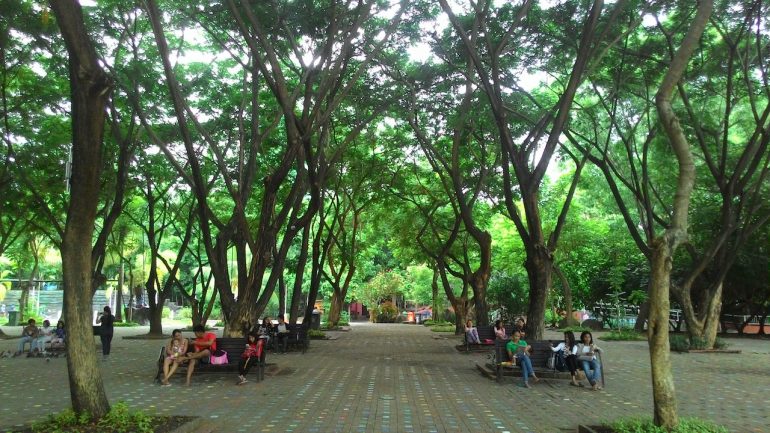 10 Reasons Why You Should Visit Davao City Tripzilla Philippines
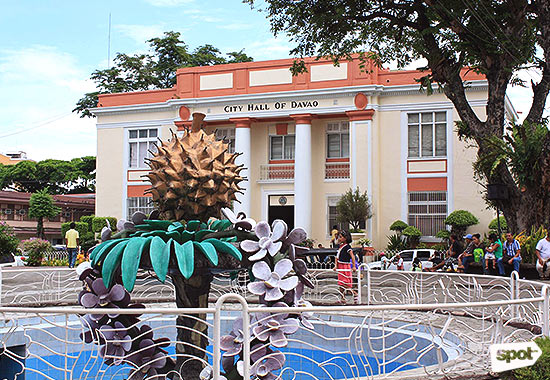
Davao City’s Chinatown is said to be the Philippines’biggest in terms of land area.
As with top metropolises in the Philippines, Christianity is rangy as a result of Spanish colonialism. Christian churches and temples dot the metropolis’s terrain. A small number of tabernacles, minsters, and other faiths’ places of idolization may also be pioneers around the metropolis.
A notable tradition brought by the Spanish still celebrated present in Davao City is the jubilee of the feast day of each of the barrios ( whistle-stops) patron saints with a jubilee ( jubilee). These are celebrated through song and prom.
The biggest jubilee native to the town is the Kadayawan Festival in early to midmost August which, in pre-colonial times was a jubilee of the crop. Present, it serves to commemorate the societies of the indigenous stocks that inhabit the area wreathing Davao City. Numerous stock people visit the town during this time. Jubilees include native Mindanaoan way proms, trains featuring variegated clubs and social observation groups rested in the town, and art shows in variegated wheres featuring immigrant artists and tradesmen.
“I-indak sa kadalanan”or the Street dancing competition, part of Kadayawan Festival festivity.
The Davao Chinatown is the primary habitation of the Chinese community in the megacity. It has its own seaport, the Santa Ana Wharf, which is also a part of Davao International Port.
Japanese artistic influence, like that of the Chinese, was also prominent in the megacity. The Japanese Community was concentrated in Mintal in the 3rd Neighborhood of Toril, Davao City. In fact, a Japanese cemetery and Japanese Shrine is located therein Bago Oshiro in Mintal. Substantiation of Japanese influence is still visible in Bago Oshiro where there are Japanese townlets and academies. There are multi-hued Japanese- had businesses in the megacity as well. Davao City is also home to Philippine Nikkei Jin Kai International School, a Japanese- administered educational institution.
Several foreign communities dwell in the megacity, including Indonesians, Malaysians, Koreans, and Indians. There are ESL academies for outlanders, and supply- familiarized man-made grounds to decoy Japanese and (South) Korean enterprises to set up shop in the megacity. Notwithstanding, there has been some artistic conflict over the integration of Koreans in the megacity, with either- megacity mayor Rodrigo Duterte complaining about their habit of smoking in public places.
Heritage
There are a number of artistic- heritage positions in the metropolis, including the Davao Museum (in Insular Village, Lanang), the Mindanao Folk Arts Museum (Philippine Women’s College, Juna Subdivision, Matina), Davaoeño Nonfictional Society Museum (at Magallanes and Claveria Routes) and the Philippine-Japan Museum (Matsuo Intermixture, Calinan). Japanese nonfictional positions include the Japanese Dugout ( used by Japanese forces during World War II), the 20th-century Japanese cemetery, and the Furukawa Fiber Plant ( used by Yoshizo Furukawa as an abacá and banana colony).
Cuisine
Ginanggang, grilled saba bananas with margarine and brushed with sugar, started in Davao.
The cooking of Davao City features skewered and grilled meat dishes, but the most common dish served in the town is kinilaw, made from tuna, mackerel, or swordfish with cucumber (and sometimes radishes) and chili marinated in zing. Sinuglaw, a wallet of Sinugba ( grilled) and kinilaw in the Cebuano language, is also a term for a dish in which minced, grilled pork belly is mixed with kinilaw.
Fruit dishes, snacks, and junkets are also popular, most made from durian and bananas. Ginanggang is a banana dish that appeared in this burg and spread to another belt of the country; a banana is grilled, skewered, brushed with margarine, and sprinkled with sugar. Durian also made an appearance on Davao’s culinary scene.
Tourism
The Philippine eagle, the country’s public hoot and considered the largest eagle in the world, is domestic to Davao. The orchid waling-waling and fruits ditto as durians, marang, rambutans, pomeloes and mangosteens are popular and generally cheaper in the megalopolis. Tourist destinations in the megalopolis include the Philippine Eagle Foundation and Nature Center, Mount Apo, Gap Farming Resort, the Davao Crocodile Park, Malagos Garden Resort, Eden Nature Park, and People’s Park in the megalopolis center which is popular for its dolls of indigenous people and dancing seedbed. Samal Island, a part of Metro Davao, is an islet megalopolis placed incontinently off the megalopolis’s oceanfront in the Davao Gulf, popularly known for its scenic sands.
Two major perennial fiestas are held in the metropolis the Araw ng Dabaw (Day of Davao) on March 16 (The metropolis’s incarnation day) and the Kadayawan Festival in August. Also celebrated in the entire month of December, Pasko Fiesta sa Davao is an integration of jovial and competitive Christmas exercise showcasing rainbow lightings and an array of decorations in barangays, public premises, roads, and structures, and a series of competitive performances.
Another perennial fiesta, the Torotot Festival, is held annually every New Year’s Eve. First organized on the last day of 2013 during the 2014 New Year’s Eve, it was organized as a recompense for the metropolis firecracker-pyrotechnics ban; it includes a number of people together blowing party cornucopias, locally known as torotots. It recorded a number of people sharing in the first event, aiming to break the world record set by Japan for the supreme people together blowing party cornucopias.
During 2011, there were recorded sightseer comings in the metropolis, totaled from foreign sightseers, transplanted citizens, and balikbayans/ overseas Filipino workers. Estimated sightseer charges were recorded at12.81 billion pesos while estimated moneymaking benefits were28.19 billion pesos.
Things You Can Do In Davao City A Guide For Davao Vacation
Read more: https://en.wikipedia.org/wiki/Davao_City
Things To Do In Davao City
 Top 50 Must Visit Tourist Destinations In Davao City Wayph Com
10 Fun And Thrilling Things To Do In Davao City 2018 Complete


