
Philippine Culture and Tourism Geography Syllabus- Here are 11 things you should know about Filipino culture that sets them apart from any other nation on the planet. The course offers an opportunity to better comprehend the diversity of culture and the reasons for what patterns there are and perhaps touch on why cultures vary from place to place.
Tourism is an important sector of the Philippine economy. In 2019, the travel and tourism sector contributed 12.7% to the country’s GDP. The Philippines is an archipelagic country consisting of 7,641 islands with 81 provinces divided into 17 regions. The country is known for its rich biodiversity as a major tourist attraction.
 Nipa Hut Village Banaue rice terraces – Philippine Culture and Tourism Geography Syllabus
History Of Tourism and Hospitality in the Philippine Culture and Tourism Geography Syllabus
Heritage beaches, cities and monuments, mountains, rainforests, islands, and dive sites are some of the country’s most popular tourist destinations. The rich historical and cultural heritage of the country, including local festivals and traditions, is also one of the attractions of the Philippines. Popular tourist destinations are Cebu, Boracay, Palawan, Siargao, and many more. But despite such great potential, the tourism industry in the Philippines lags behind Southeast Asian countries such as Thailand, Vietnam, Malaysia, Singapore, and Indonesia due to political and social problems.
As of 2015, 4.99 million Filipinos were engaged in tourism, and the government collected 227.62 billion pesos from foreign tourists, of which almost 25% came from Boracay. The country attracted a total of 5,360,682 foreign visitors in 2015 through its “Philippines is more fun” tourism campaign. In 2018, the number of foreign arrivals reached 8,168,467.
The Philippines has won many titles related to tourism, namely: the traditional capital of world holidays, the capital of the Western Pacific, the center of Latin American Asia, the pearl of the Eastern Seas, the center of the Coral Triangle, and the capital of pleasure. The country is also a biodiversity hotspot, with the highest rate of endemism of bird species in the world and one of the highest rates of mammals and plants.
It is also the largest bastion of Roman Catholicism in all of Asia. The country is also home to one of the New7Wonders of Nature, the Puerto Princesa Underground River National Park, and one of the New7Wonders, the Vigan Heritage City. It also hosts six UNESCO World Heritage Sites, spread over nine different sites, three UNESCO Biosphere Reserves, three UNESCO Intangible Cultural Heritage Sites, four UNESCO World Heritage Sites, a UNESCO Creative City, two UNESCO World Heritage Sites, seven Ramsar sites and eight ASEAN. cultural heritage parks. More than 60% of Filipinos understand and speak English, as many of them speak several languages.
Overview of the History Of Tourism And Hospitality In The Philippines
- Palawan, including Coron, is a UNESCO Biosphere Reserve.
- Basque Lighthouse in the Batons protected landscape and seascape, pre-listed by UNESCO
- Mayon Volcano, a perfectly conical volcano in the UNESCO Biosphere Reserve of Albay
- Gate of the Fort of Santiago, one of the entrances to the Intramuros district of Manila
- Mount Apo, the highest elevation in the Philippines, a sacred mountain located in Mindanao, and ASEAN Heritage Park
- Metropolitan Cathedral of Cebu, the site of the first church in the Far East
- Chocolate Hills, a natural geological monument in Bohol and a heritage the UNESCO
- One of the many bars Art Deco facilities in the Philippine’s Art Deco capital
- Tubbataha Cliffs Natural Park, UNESCO World Heritage Site, and award for future marine resource management policy
- Some sculptures in Angono Petroglyphs, the oldest rock art in the Philippines and UNESCO
- Nepenthes Sibuyanensis from the highly protected island of Sibuyan, endemic index of E. Internationally recognized biodiversity comparable to the island and the Galapagos Geological history
- The University of Santo Tomas has the oldest surviving university charter in Asia.
- Callao Cave, a Paleolithic area in the Cagayan Valley where the 67,000-year-old Callao man was found
- Coffin hanging in Sagada, a mountainous area
Tourism plays an important role in the country’s economy. With the growth of the tourism industry after the People Power Revolution, economic growth has undergone major changes until today. In 2003, the number reached 2,838,000, an increase of nearly 29%, and is expected to rise by 3.4 million in 2007. During the first quarter of 2007, tourist arrivals to the Philippines increased by as much as 20% compared to the same period last year. In 2011, the Ministry of Tourism registered 3.9 million tourists visiting the country, 11.2 percent more than the 3.5 million recorded in 2010.
In 2012, the Philippines recorded 4.27 million tourist arrivals, after the Department of Tourism launched a widely publicized tourism marketing campaign entitled ‘It’s More Fun in the Philippines’.
The World Economic Forum’s 2017 Travel and Tourism Competitiveness Report ranked the Philippines 79th out of 136 countries. The country’s best ranking features were price competition (22nd) and natural resources (37th). The tourism industry accounted for 3.8 million Filipinos in 2011, or 10.2 percent of national employment, according to data compiled by the National Statistics Coordination Board. The Aquino administration is eager to pump out $1 billion [needs clarification] to employ 7.4 million people by 2016, or about 18.8 percent of the total workforce, or 8 to 9 percent of the GDP of the condition.
The official heritage of the Philippines is listed in the Government of the Philippines Registry of Cultural Assets (PRECUP), Pinagmulan: Census of the Philippine Inventory of Intangible Cultural Heritage, and the National Protected Areas of the United Nations (NIPAS). Sites registered under these lists are declared as potential nominations for the UNESCO World Heritage List, with at least 16 declarations containing 19 sites recognized by UNESCO across four different lists (World Heritage List UNESCO World Memory Register). UNESCO World Heritage List, UNESCO Intangible Heritage List, and UNESCO Biosphere Reserve Register)
History of Philippine
The history of tourism in the Philippines goes back to ancient times. After the first group of people decided to migrate across the overpass, other migration groups followed from the Malay Archipelago in the south and Taiwan in the north. Over time, many ethnic language groups developed, with some becoming monarchs, gold coins, hunter-gatherers, and city-states. Trade also became part of tourism as Arabs, Indians, Japanese, Chinese, Malaysians, and other ethnic groups in Southeast Asia, Taiwan and Ryukyu traded goods with the natives. When the islands became part of Spanish territory, an influx of Spaniards moved into the country, although there were still far fewer Spanish immigrants in South America because the Philippines was so far from Spain.
The tourism industry really flourished from the end of the 19th century to the beginning of the 20th century, first due to the influx of immigrants from Europe and the United States. It is listed as one of the best countries to visit in Asia besides Hong Kong and Japan, and has the nickname “Pearl of the East Sea”. Tourism declined during and after World War II, leaving the country with a completely ruined economy and ruined historic cities.
The second wave of tourist influx flourished in the 1950s but declined sharply during the dictatorship. After the human power revolution, the tourism industry continued to decline due to the domino effect caused by the dictatorship. The industry did not survive until 1991 and 1992 when 1.2 million tourists visited the Philippines. Ten years later, it was again ravaged by corrupt practices of the government. It has been widely recognized as an international success that has attracted international media attention.
The country experienced an influx of tourists from all over the world, using social media and creative slogans, with 5,360,682 foreign tourists visiting the country in 2015. The industry continued to grow in 2017, but the ongoing drug war and the announcement of martial law in Mindanao led to a sharp decline in the growth rate of Western tourists.
Nevertheless, growth continued due to an influx of Asian and Russian tourists 4 444 4 billion international visitors arrived from January to July 2014, an increase of 2.24% for the same period in 2013. Of these, 46.96% came from East Asia, 18.79% came from North America, and 9.37% came from other ASEAN countries. From January to December 2019, the number of foreign visitors was 8,260,913, up 15.24% from the same period in 2018. Of these, 58.62% (4,842,774) were from East Asia, 15.84% (1,308,444) were from North America, and 6.38% (526,832) were from other ASEAN countries. In 2015, the travel and tourism industry provided 10.6% of the country’s GDP.
Source: https://en.wikipedia.org/wiki/Tourism_in_the_Philippines
Syllabus course details course no.
Philippine culture and tourism geography syllabus. Inability to develop and expand air accessibility to key growth markets in terms of routes, frequencies, and capacities. 3 units This course presents a survey of the world and Philippine literature in English, from its beginning to the present with an emphasis on the different types of genres. Tourism geography, and culture what is tourism?
Tourism books college books by the rex book store. Philippine culture and tourism geography thc 103 Ancheta, Kenneth d. 338.48+640(050) 159 tourism development and politics in the Philippines Joan c.
The major islands are Luzon in the north, Us nationals and permanent residents (green card holders) are exempt from the Philippine travel tax. Bumanlag, Janella date Philippines location 1 the Philippines comprises an archipelago of some 7,641 islands located off southeast Asia.
The cultural landscape also features Spanish, American, Japanese, Arabic, and Indonesian influences. Cultural geography is the study of such diversity; It is an examination of patterns of language, religion, population, migration, economic activities, etc.
Inadequate air, sea, and road connectivity between the major. However, for visitors from the USA, Canada, Australia. “ activities of persons traveling to and staying in places outside their usual environment for not more than one consecutive year for leisure, business, and other purposes.” what is tourism?
A pure activity where money earned is spent in places visited. Students are familiarized with key works and theories in tourism geography. The literature of the different regions of the world and the Philippines,
Global culture and tourism geography course description introduction and analysis of specific world travel destinations, including the exploration of geographic features, customs and traditions, population centers, visitor attractions, political, religious, language and other cultural differences as these relate to the Instead of wallowing, they manage to pick themselves up and smile. An international multidisciplinary journal of tourism volume 6, number 2, autumn 2011, pp.
The Philippine travel tax is php1,620.00 (approximately $35.00). In times of calamities and catastrophes, Filipinos always manage to rise above the challenge. Major discussions will be on access, health and safety issues, geographical.
Aged and heavily congested and outdated international airport infrastructure and operations system. 1.1 Philippine geography, history, and economy the Philippine archipelago is composed of about 7,100 islands and lies strategically within the arc of nations that sweeps southeastward from mainland Asia to Australia. Tourism as a phenomenon, as a field of study or research, and as an industry moreover, as an industry, the course nevertheless looks at the various sectors that comprise tourism considering especially the relationship between the public and private sectors and their involvement in the tourism system and how they interact with each other.
Course description this course presents a comprehensive survey of major tourist destination areas in the Philippines. Henderson1 Nanyang technological university the paper examines tourism in the Philippines, a Southeast Asian nation which This course explores how humans create places through culture and their adaptation to the physical environment.
Tourism & hospitality studies department of geography central Connecticut state university geog 290 geographies of tourism course syllabus dr. Philippine society is a unique blend of diversity and homogeneity. Forces of assimilation have constantly worked to overcome cultural differences between the various ethnic groups that are scattered—sometimes in relative isolation—throughout the.
Ilocos Region (Region 1) i. It has a total land area of 300,000 Oracion hm instructor the meaning and importance of tourism what is tourism?.
Us permanent residents need to secure a travel tax exemption certificate from the Philippine tourism authority at the department of tourism building at tm Kalaw street, Ermita manila. Mission the university shall provide quality, relevant, and responsive scientific. Formal and functional aspects of spatial decision-making are stressed.
University of Santo Tomas College of tourism & hospitality management 1 st semester a.y. The Philippines is commonly referred to as a melting pot of western and eastern cultures. Tourism geography (7.5 credits) this part deals with tourism geography and its position within social and economic geography.
It is both a survey course and an introduction to the discipline of geography. Emphasis will be on tourism as an economic activity. Basic knowledge of Philippine and world history and geography is needed in the subject because it is in this aspect where the students will be able to identify the origin of the food itself.
And green tourism management) 3 Concerned with a country or region’s culture, culture geography cultural tourism movement of persons to cultural attractions away from their normal place of residence, with the intention to gather new information and experiences to satisfy their cultural needs”. Demographic of a typical international tourist in the Philippines:
It focuses on traditions of thought in tourism geography. Tm 202 course title. World and Philippine literature prerequisite:
The traditional culture of the Philippines is heavily influenced by the traditions of the indigenous Austronesian people.
 Pin by Seeker on Beautiful Philippines Visit Philippines – Philippine Culture and Tourism Geography Syllabus
 Top 10 Dumaguete Philippines’ Best Attractions – Philippine Culture and Tourism Geography Syllabus
The Best of the Philippines (With images) Siargao island
Batanes Philippines, stone houses. Batanes, Wonderful
 Pin on Local Travel Photos – Philippine Culture and Tourism Geography Syllabus
 10 Unique Experiences You Can Only Have in the Philippines – Philippine Culture and Tourism Geography Syllabus
Batad, Philippines (With images) Philippines, Golf
 Transient Pinay Zambales, Short trip, Trip – Philippine Culture and Tourism Geography Syllabus
Pin by Petra on My Saves in 2020 Travel destinations- Rice Terraces Sagada, Mountain Province, Philippines
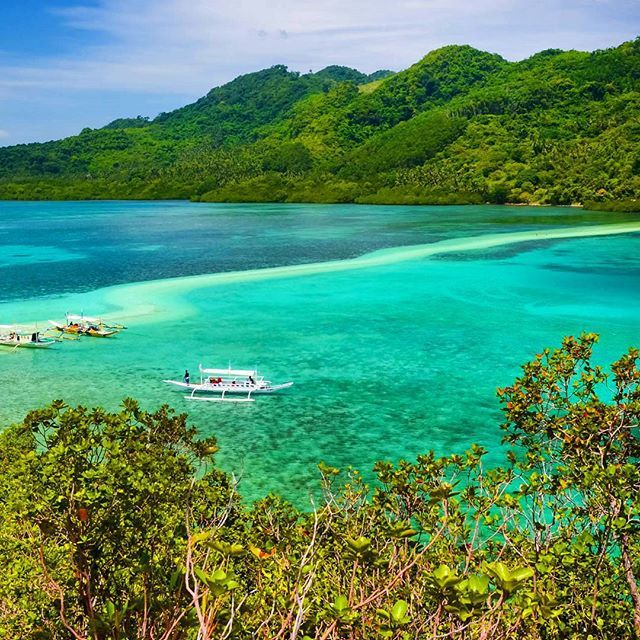
Pin on Ultimate El Nido, Philippines
 Shangrila Mactan, Cebu, Philippines sceneries Shangri – Philippine Culture and Tourism Geography Syllabus
Ancient 2,000 year old rice terraces in the Philippines


